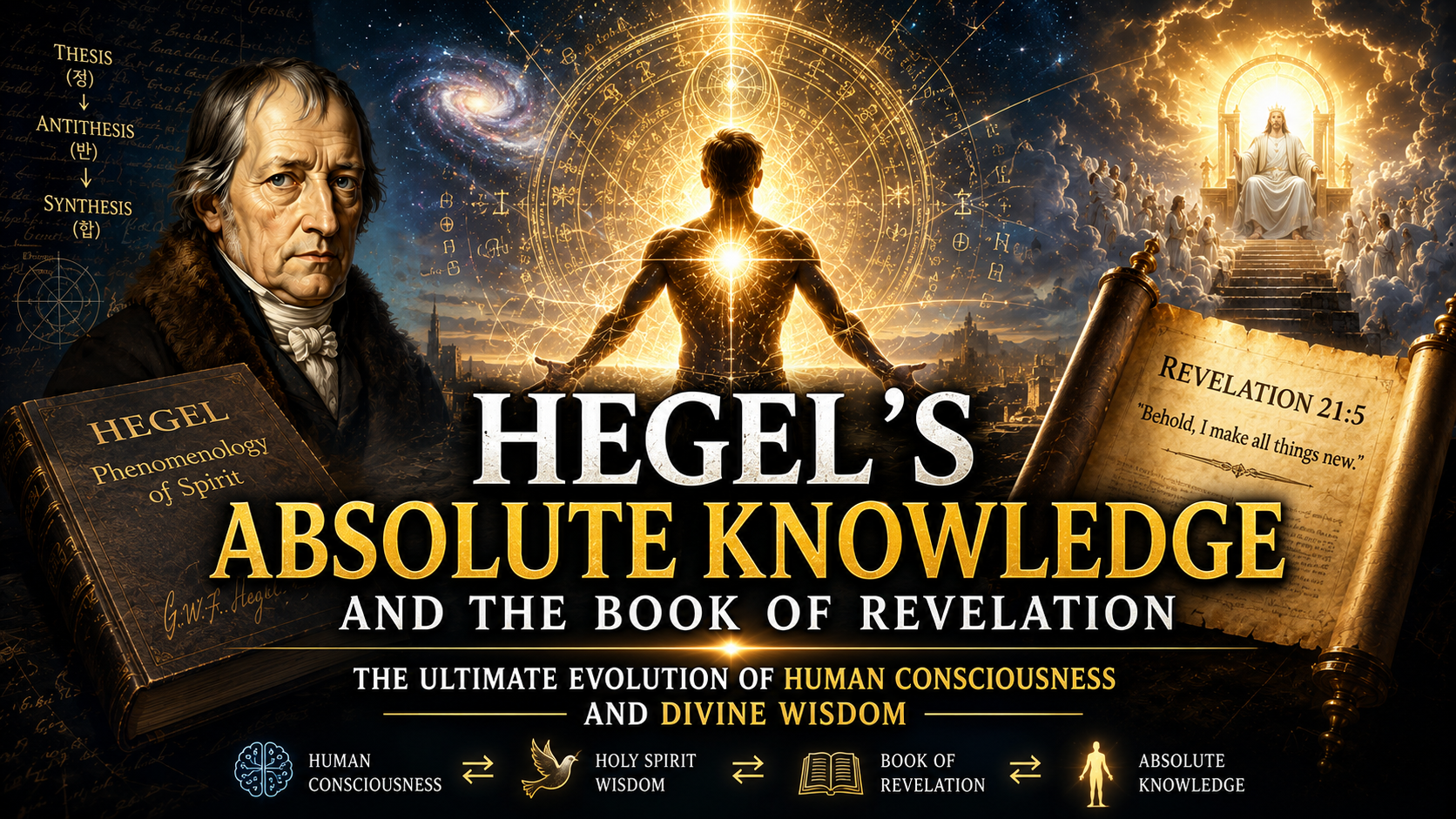

Hegel’s Absolute Knowledge and the Book of Revelation
The Ultimate Evolution of the Human Spirit and Divine Wisdom
Meta Description
This article explores Hegel’s concept of Absolute Knowledge through the lens of the Book of Revelation, connecting philosophy, Christian prophecy, human consciousness, spiritual evolution, and the final awakening of the human spirit.
Suggested Tags
Hegel Absolute Knowledge, Book of Revelation, Phenomenology of Spirit, Spiritual Evolution, Holy Spirit, Evil Spirit, Christian Philosophy, K-Philosophy, Human Consciousness, Truth Seeking, Spiritual Awakening, Revelation Explained, Philosophy and Religion
Introduction: The Human Journey Toward Ultimate Knowledge
Human history can be understood as one long intellectual and spiritual journey toward truth.
Across East and West, philosophers, mystics, theologians, and seekers have devoted their lives to one question:
Can the human mind ever reach ultimate wisdom?
Among the greatest figures in Western philosophy, Georg Wilhelm Friedrich Hegel stands at the summit of German Idealism. In his monumental work Phenomenology of Spirit, Hegel argued that human consciousness develops through a dialectical process and can eventually reach a state called Absolute Knowledge.
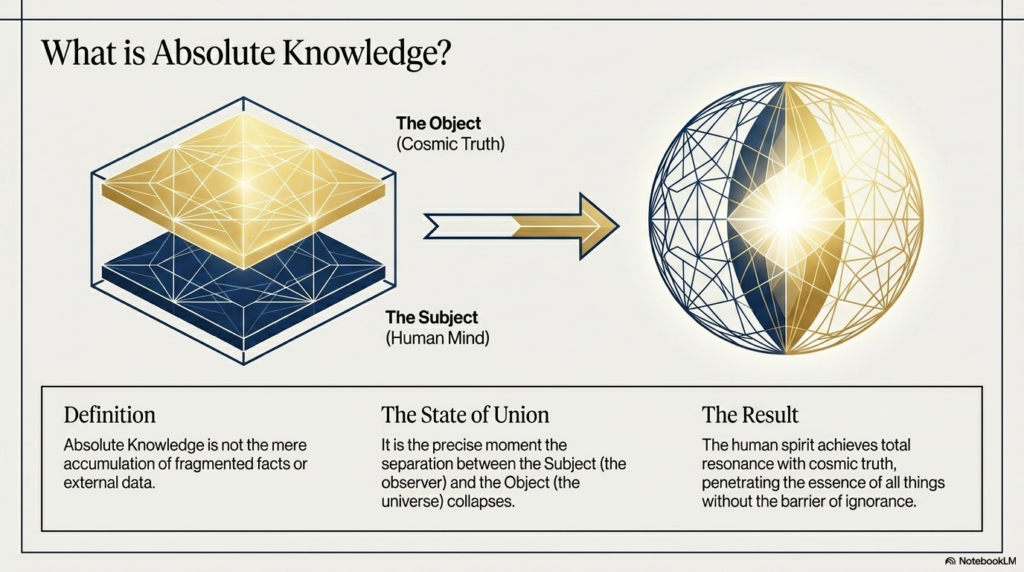
But Hegel’s Absolute Knowledge is not simply the accumulation of information.
It is not merely knowing many facts.
It is the state in which the human spirit fully understands itself, reality, history, and the ultimate ground of existence.
In this state, the division between subject and object begins to disappear. Human consciousness no longer sees itself as separate from truth. It becomes united with the deeper structure of reality.
Surprisingly, this philosophical destination bears a striking resemblance to the final spiritual goal presented in the Bible, especially in the Book of Revelation.
Most people read Revelation as a book about disaster, judgment, and the end of the world.
But from another perspective, Revelation may be read as a grand blueprint of human spiritual evolution. It describes the process by which humanity moves from ignorance to wisdom, from spiritual blindness to revelation, and from separation to union with divine truth.
This article explores the relationship between Hegel’s Absolute Knowledge and the Book of Revelation from the perspective of K-Philosophy.
It examines the origin, fall, restoration, and completion of the human spirit.

1. Hegel’s Philosophy and the Wisdom of the Holy Spirit
At the center of Hegel’s philosophy is Spirit.
For Hegel, history is not merely a sequence of events. It is the process through which Spirit comes to know itself.
Human civilization, conflict, religion, philosophy, and consciousness are all stages in the unfolding of Spirit.
Hegel’s use of the word “Spirit” is especially important. He was deeply influenced by Christian theology, and his philosophical system cannot be fully understood apart from its religious background.
The very title Phenomenology of Spirit suggests that ultimate wisdom emerges through the activity and development of spirit, mind, and consciousness.
This insight closely resembles the biblical teaching about the Holy Spirit.
In 1 Corinthians 2, the Bible says that the Spirit searches all things, even the deep things of God.
This means that the Holy Spirit is not merely a vague religious emotion. The Holy Spirit is presented as the Spirit of wisdom that knows the deepest reality of God.
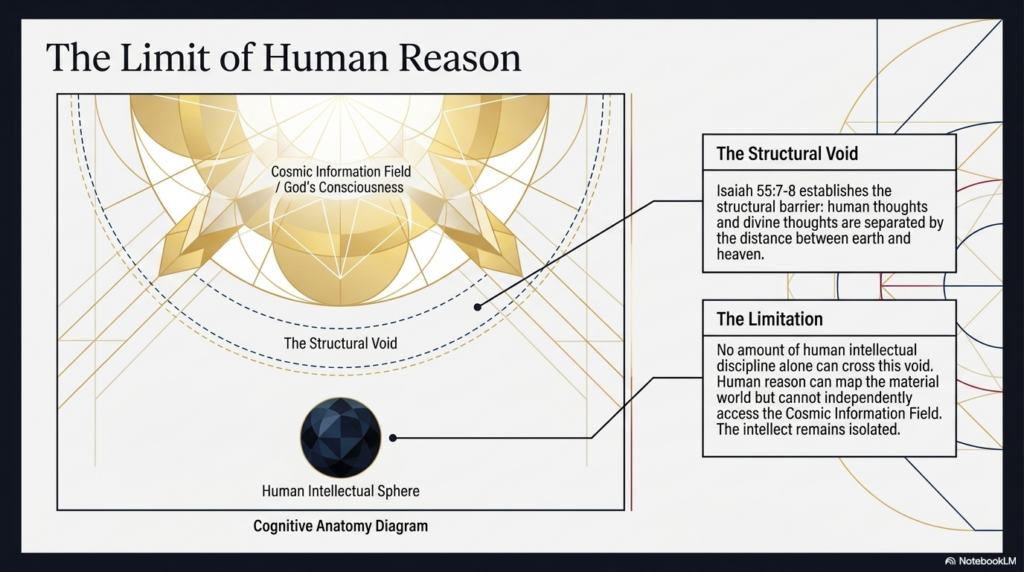
At the same time, Isaiah 55 says that human thoughts and God’s thoughts are as different as heaven and earth.
In other words, limited human reason cannot reach divine truth by itself.
However, when the Spirit of divine wisdom joins with the human spirit, human consciousness can rise beyond ordinary understanding.
From this perspective, Hegel’s Absolute Knowledge may be understood as a philosophical expression of the state in which the human spirit participates in divine wisdom.
Absolute Knowledge is not gained merely by human effort.
It is the completion of spiritual union with the wisdom of the Holy Spirit.
2. The Path Opened by Kant and Completed by Hegel
Can human beings see the world exactly as it is?
This question shook modern philosophy.
Immanuel Kant argued that human beings do not experience the world as it exists in itself.
Instead, we experience the world through the structure of human perception and understanding.
What we call “reality” is not simply the external world as it is. It is the world as it appears through the human mind.
This was one of the great revolutions in the history of philosophy.
Before Kant, many assumed that human reason and perception could show us reality directly.
But Kant revealed that the world we experience is already shaped by consciousness.
In simple terms, human beings do not merely see the world.
They interpret it.
However, Kant stopped at a certain boundary.
He remained cautious about whether human beings could ever fully know the thing-in-itself, the ultimate reality beyond appearance.
Hegel went further.
He argued that human Spirit develops through history, contradiction, experience, and self-awareness until it reaches ultimate truth.
Hegel’s Absolute Knowledge is the state in which the human spirit no longer sees itself as separate from the world.
Subject and object are reconciled.
Human spirit and Absolute Spirit become unified.
From this perspective, Hegel’s philosophy resembles a story of spiritual salvation.
Interestingly, the Bible also presents a grand story of the fall and restoration of the human spirit.
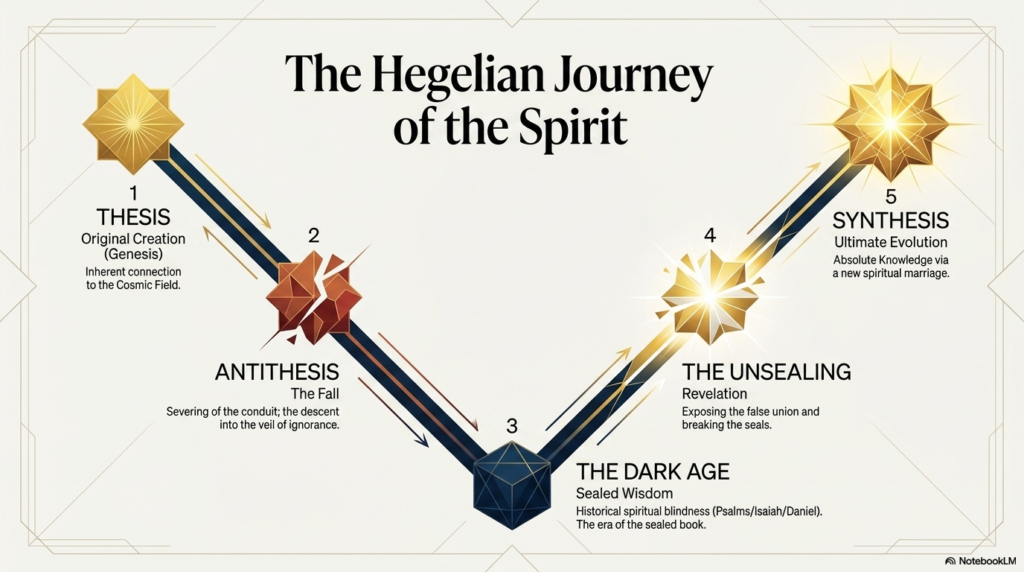
Genesis describes humanity’s separation from the divine source.
Revelation describes humanity’s return to unity with that source.
If Kant discovered the structure of human perception, Hegel pointed toward the final destination of human consciousness.
The Bible, through symbol and prophecy, may be understood as describing the path toward that destination.
In this sense, Revelation can be read not only as an apocalyptic text but as a document of spiritual evolution, showing how the human spirit reaches Absolute Knowledge.
3. A Philosophical Reinterpretation of Genesis: The Origin of Spiritual Ignorance
If humanity is capable of Absolute Knowledge, why do human beings live in ignorance?
Why do we not already possess perfect wisdom?
This tragic condition is symbolically revealed in Genesis.
In this interpretation, Genesis is not merely a story of biological origins. It is a symbolic account of the fall of human consciousness.
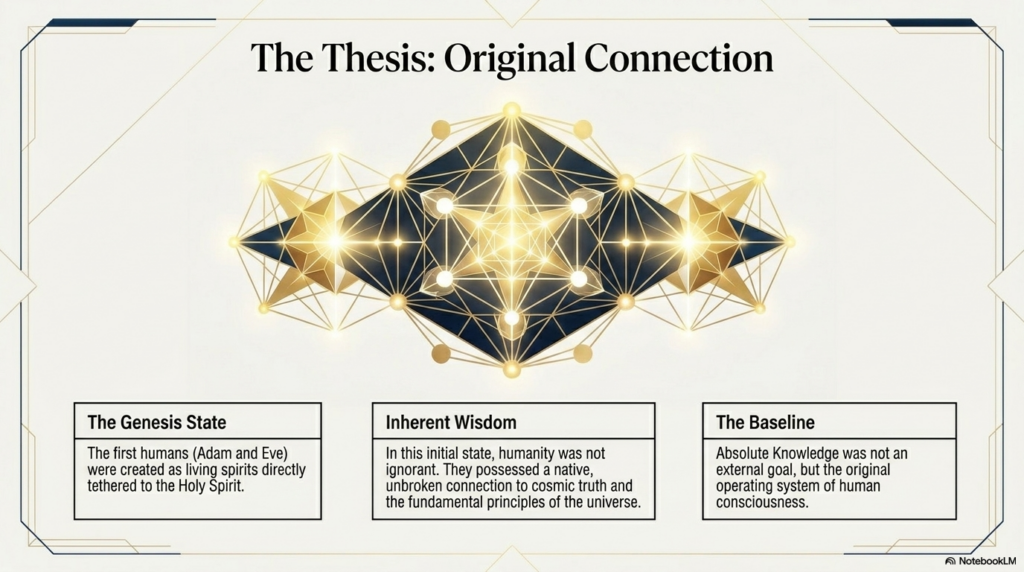
Adam and Eve were originally created as living spirits, connected to the divine source of life.
In this original state, humanity was not blind to truth. The human spirit was alive, connected, and aware.
But the serpent entered the story.
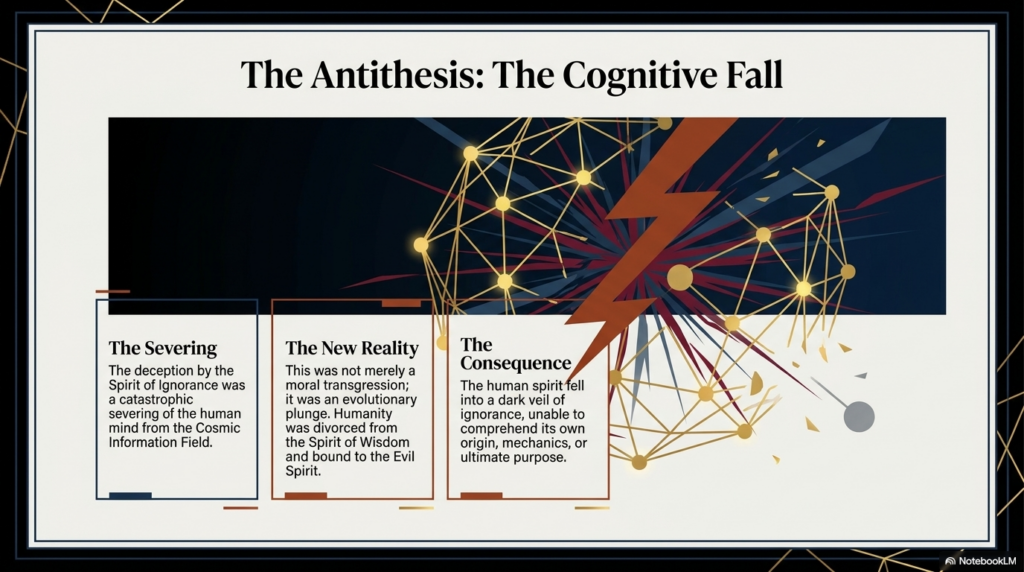
The serpent represents more than a literal animal. It symbolizes the evil spirit that deceives human consciousness.
Through this deception, the human spirit fell from its original state of wisdom and became spiritually dead.
This fall was not merely moral disobedience.
It was a collapse of consciousness.
Human beings lost connection with the Spirit of wisdom and entered into a state of spiritual ignorance.
From this point onward, the human spirit became trapped in darkness, unable to understand its own origin, nature, and destiny.
In biblical language, there are two spiritual conditions:
The Holy Spirit, which gives wisdom and life.
The evil spirit, which produces ignorance and death.
The tragedy of human history begins when humanity loses connection with the Holy Spirit and falls under the influence of spiritual ignorance.
4. The History of Spiritual Blindness and the Sealed Wisdom
After the fall into spiritual ignorance, Scripture repeatedly describes humanity as blind.
Truth exists, but human beings cannot perceive it.
Wisdom is present, but access to it is sealed.
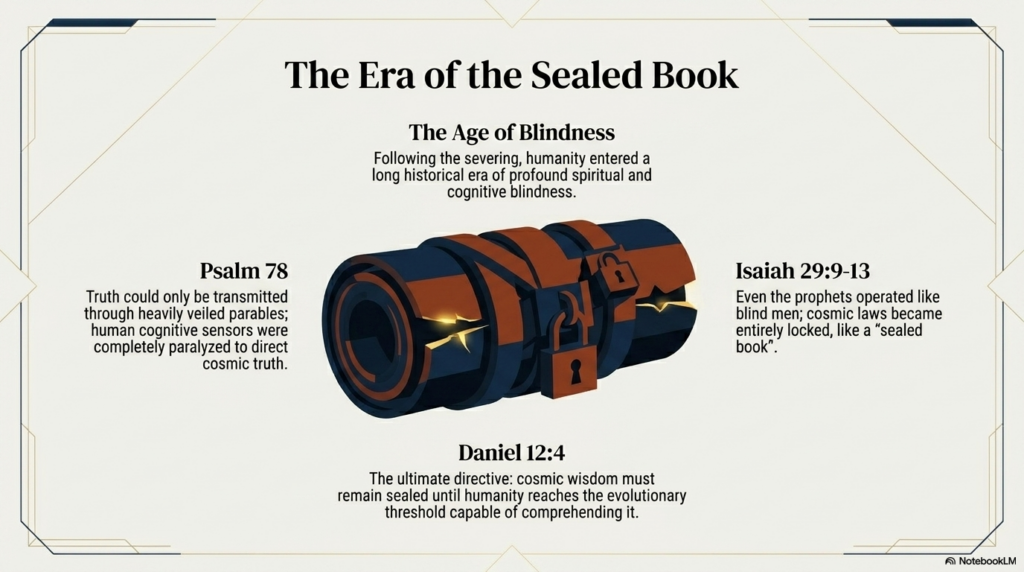
Psalm 78 says that divine truth has been spoken through parables and hidden mysteries.
Why would truth be hidden?
Because humanity lost the spiritual capacity to receive it directly.
Isaiah 29 describes a sealed book that even prophets and seers cannot read. This image reveals a tragic condition: the wisdom of the spiritual world is closed to humanity.
People may possess knowledge.
They may study religion.
They may read sacred texts.
Yet they remain unable to perceive the deeper meaning.
This is spiritual blindness.
Daniel 12 also says that certain words are sealed until the time of the end.
This means that divine wisdom remains hidden until humanity reaches the appointed time of spiritual awakening.
From this perspective, history becomes a long period of sealed knowledge.
Truth exists, but it is covered.
Wisdom exists, but it is locked.
Humanity waits for the moment of revelation.
5. Revelation Explained: The Opening of Spiritual Wisdom
Eventually, the time comes for sealed wisdom to be opened.
That turning point is presented in the final book of the Bible: the Book of Revelation.
The word “Revelation” means unveiling.
Opening.
Disclosure.
It is not primarily a book of fear. It is not merely a prophecy of global destruction.
It is the opening of what had been hidden.
The Book of Revelation reveals the mystery of the human spirit, the reality of spiritual ignorance, and the process through which divine wisdom becomes accessible again.
In this context, Revelation 18 exposes the spiritual condition of humanity.
It describes nations intoxicated by the wine of Babylon’s immorality.
From a philosophical and spiritual perspective, this can be interpreted as humanity being united with the spirit of ignorance.
It is a form of spiritual marriage with the evil spirit.
This does not mean a physical marriage.
It means that human body, mind, and society have become united with falsehood, deception, and spiritual blindness.
Humanity has been bound to the shallow knowledge of the material world while being cut off from the absolute wisdom of the divine Spirit.
This is the true condition of spiritual ignorance.
6. A New Spiritual Union with the Holy Spirit
However, the dialectical evolution of the human spirit does not end in ignorance.
According to Hegelian logic, contradiction must move toward resolution.
The state of spiritual blindness becomes the necessary background for a greater transformation.
This transformation appears in Revelation 19.
Revelation 19 presents the image of a new marriage.
After separation from Babylon and the corrupt spiritual union of Revelation 18, a new union appears: the Marriage Supper of the Lamb.
This represents the human spirit leaving behind its union with ignorance and entering into union with the Holy Spirit.
It is a spiritual divorce from the evil spirit and a new spiritual marriage with divine wisdom.
The Holy Spirit may be understood as the woman of wisdom, the Spirit that knows the deep things of God.
When human consciousness joins with this Spirit, it enters a new state.
The darkness of ignorance is broken.
The field of death is left behind.
Humanity enters the field of life, wisdom, and divine consciousness.
This is the point where Hegel’s Absolute Knowledge and the biblical vision of the Holy Spirit meet.
Human beings no longer need to beg for fragments of knowledge from outside.
Wisdom begins to rise from within.
7. Hebrews and the Time When All Shall Know God
Hebrews 8 presents a remarkable prophecy.
It says that the time will come when people will no longer need to teach one another, saying, “Know the Lord.”
Why?
Because all will know God, from the least to the greatest.
This is one of the most powerful statements in the Bible.
It points to a future state in which the knowledge of God becomes universal.
Not restricted to priests.
Not limited to scholars.
Not hidden behind sealed texts.
All people will know.
This is not ordinary religious education.
It is the opening of spiritual consciousness.
When humanity is united with the Holy Spirit, divine wisdom becomes internal.
Truth is no longer merely taught from outside.
It is realized from within.
This is the biblical equivalent of ultimate spiritual awakening.
It is also deeply connected to Hegel’s vision of Absolute Knowledge.
8. Why AI Cannot Reach Absolute Knowledge
In the modern world, artificial intelligence is advancing rapidly.
AI can process enormous amounts of data.
It can analyze language, recognize patterns, generate images, and solve complex problems.
In some areas, AI already surpasses human performance.
But one question remains:
Does AI know that it exists?
AI can calculate.
AI can answer.
AI can imitate reasoning.
But AI does not experience itself as an “I.”
It does not suffer.
It does not love.
It does not seek salvation.
It does not awaken to its own existence.
Hegel’s Absolute Knowledge is not merely the possession of information.
It is the complete self-awareness of Spirit.
It is consciousness recognizing itself and its relation to the whole.
This is why Absolute Knowledge cannot be reduced to data.
Even if AI possessed all the information in the world, it would not necessarily possess spiritual awareness.
The problem of consciousness remains deeper than computation.
This is why the question of Absolute Knowledge belongs not merely to technology, but to human consciousness and spiritual evolution.
9. Are We Standing at the Threshold of Consciousness Evolution?
Humanity has explored the external world for thousands of years.
Science has analyzed matter.
Philosophy has investigated being.
Religion has explored the soul.
But now humanity returns to a single question:
How far can human consciousness evolve?
If Hegel’s Absolute Knowledge is real, then human history may not be merely political, economic, or technological.
It may be the story of consciousness awakening to itself.
If Revelation describes the unveiling of divine wisdom, then the future of humanity may not be defined only by machines, nations, or material progress.
It may be defined by spiritual awakening.
Science, philosophy, and religion may appear to walk different roads.
But perhaps they all point toward the same mystery.
Who are we?
Where did human consciousness come from?
And how far can the human spirit go?
Perhaps we are standing at the threshold of a great transformation.
A transformation not merely of society, but of consciousness itself.
Conclusion: The Final Destination of Hegel’s Absolute Knowledge and Revelation
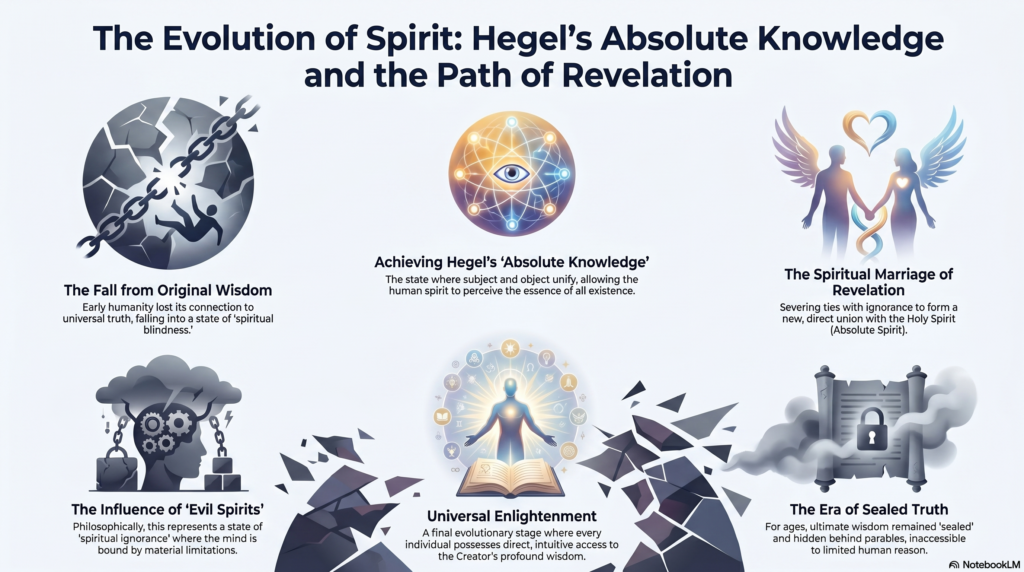
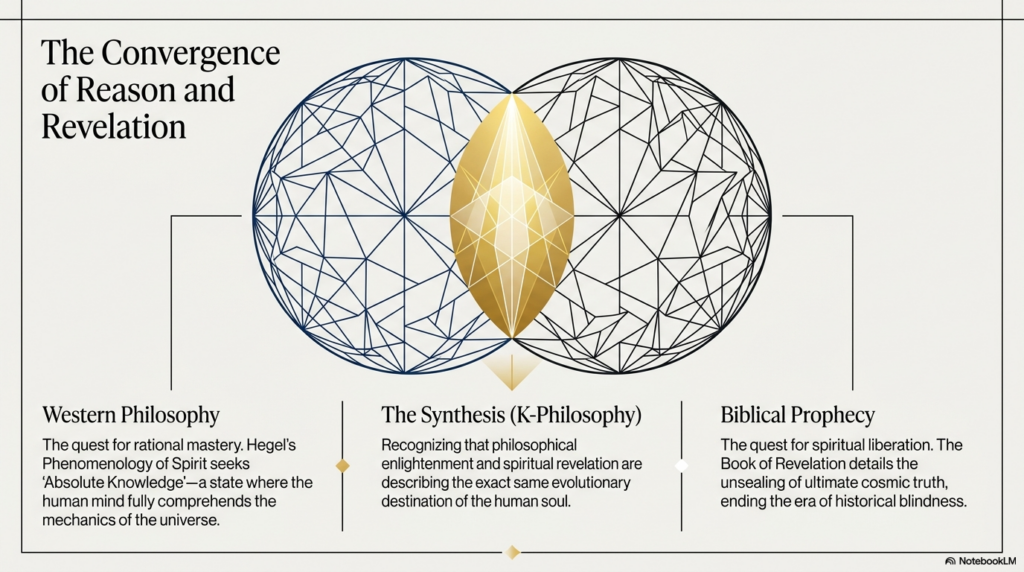
From the perspective of K-Philosophy, Hegel’s Absolute Knowledge and the Book of Revelation can be read together as two different languages describing the same ultimate destination.
Hegel discovered, at the end of philosophical thought, the final goal of Spirit.
The Bible prophesied, through symbol and revelation, the final liberation of the human soul.
Humanity fell into spiritual blindness in Genesis.
For a long time, it wandered in sealed ignorance.
But this darkness was not the end.
It was part of a dialectical process leading toward a higher synthesis.
Now, according to Revelation, the time comes for humanity to leave behind its spiritual union with ignorance and enter into union with the Holy Spirit.
Through this new union, human beings can rise toward the state of Absolute Knowledge.
The Book of Revelation is not merely the prelude to destruction.
It is a blueprint of the completion of human spiritual evolution.
It reveals how spiritually blind humanity becomes united with divine wisdom and recovers cosmic understanding.
At the point where Eastern and Western philosophy, Christian prophecy, and the evolution of consciousness meet, humanity is invited to recognize its infinite spiritual potential.
The task before us is not merely to acquire more information.
It is to awaken.
It is to move from ignorance to wisdom.
From spiritual blindness to revelation.
From separation to union.
And perhaps this is the true meaning of Absolute Knowledge.
Related Video
Hegel’s Absolute Knowledge and the Book of Revelation
Watch the full video here:
https://youtu.be/lfe50BxuIJU