Where Does Consciousness Come From? Science Still Has No Answer.
Every human being enters the world through a body.
We inherit genes from our parents.
Our cells divide, our organs develop, and our brains gradually form.
Biology can describe much of this process with extraordinary precision.
Yet beneath every biological explanation, one question remains unanswered.
Where does consciousness come from?
Where does the inner awareness that says “I am” begin?
Science can observe the development of the brain.
It can measure electrical activity between neurons.
It can identify regions associated with memory, language, emotion, and perception.
But even after mapping the machinery of the brain, a deeper mystery remains.
Why is there someone experiencing any of it?
A brain may process signals.
But processing alone does not explain why light becomes a visible world, why sound becomes music, or why physical pain becomes a private experience.
Most importantly, it does not yet explain why there is a subject who can say:
“This is happening to me.”
This chapter begins with that unresolved question.
Perhaps consciousness is not merely something produced by the body.
Perhaps the body is the means through which consciousness appears in the physical world.
1. What Is Reading These Words Right Now?

You are reading these words.
Your eyes receive light reflected from the screen.
That light is converted into electrical signals.
Those signals travel through the nervous system and are processed by the brain.
Science can describe much of this pathway.
But the explanation stops at a crucial point.
Who understands the meaning?
The eye does not understand.
It receives light.
The optic nerve does not understand.
It transmits signals.
Individual neurons do not understand.
They respond through electrochemical activity.
Even if the brain coordinates the entire process, the central question remains:
Who is aware of the result?
The brain can be observed.
Neural activity can be measured.
Thoughts can be reported.
But the one who experiences the thought cannot be placed on a laboratory table as an object separate from experience itself.
This is why consciousness is not simply another organ to be located.
It is the condition through which every organ, object, thought, and measurement becomes known.
We study the brain through consciousness.
We study matter through consciousness.
We formulate science through consciousness.
And yet we often assume that matter created the very consciousness through which matter is known.
That assumption may be correct.
But it is still an assumption, not a completed explanation.
2. Does the Brain Produce Consciousness?
The dominant materialist view holds that consciousness emerges from the activity of the brain.
According to this view, sufficiently complex networks of neurons produce perception, memory, thought, emotion, and eventually self-awareness.
There is strong evidence that the brain and conscious experience are intimately connected.
Brain injuries can alter personality.
Drugs can change perception.
Anesthesia can interrupt ordinary awareness.
Electrical stimulation can produce sensations, memories, and movements.
These findings cannot be ignored.
But correlation is not necessarily the same as origin.
When a television is damaged, the image becomes distorted.
That does not prove that the people appearing on the screen were created inside the television.
When a radio receiver is broken, the sound disappears.
That does not prove that the broadcast originated in the speaker.
These comparisons do not prove that the brain is merely a receiver.
They serve a more modest purpose.
They show that damage to an instrument can alter an output without necessarily proving that the instrument created the source.
The brain may produce consciousness.
It may filter it.
It may organize it.
It may translate it into biological experience.
Or it may participate in a relationship we do not yet fully understand.
At present, neuroscience has discovered many conditions associated with consciousness.
It has not reached universal agreement on why physical activity should generate subjective experience at all.
This is sometimes called the “hard problem” of consciousness.
The problem is not merely how the brain distinguishes red from blue.
The deeper problem is why red is experienced as anything in the first place.
3. Parents Give Us a Body, but Do They Give Us Consciousness?
Every person is born through parents.
A biological process joins genetic material, forms an embryo, and gradually develops a human body.
Parents participate in the creation of the body.
But do they also create the consciousness that later awakens within it?
Parents do not consciously design their child’s awareness.
They do not choose the first thought the child will have.
They do not assemble the child’s sense of self.
They provide biological conditions through which a new human life develops.
But the emergence of the inner subject remains mysterious.
Genes can influence the structure of the brain.
They can influence temperament, physical characteristics, and susceptibility to certain conditions.
Yet a genetic description is not the same as an explanation of first-person experience.
DNA contains biological instructions.
But where, within those instructions, is the experience of being alive?
Where is the feeling of warmth?
Where is fear?
Where is wonder?
Where is the silent awareness that recognizes:
“I exist”?
The body can be traced through heredity.
Consciousness cannot yet be traced so easily.
Parents produce another living body through biological reproduction.
But whether they produce consciousness itself remains an open philosophical and scientific question.
4. Who Was the First Being to Know, “I Exist”?

Evolutionary theory explains how populations change across generations.
It describes natural selection, mutation, adaptation, and common ancestry.
It is one of the most influential frameworks in modern biology.
But even if evolution explains how nervous systems became increasingly complex, another question remains.
At what point did experience begin?
Consider the long history of life.
There were once no human beings.
Before mammals, there were simpler organisms.
Before complex nervous systems, there were single-celled forms of life.
If consciousness emerged gradually from matter, when did the first subjective experience appear?
Was there a first creature that felt pain rather than merely reacted to damage?
Was there a first organism that experienced light rather than simply responded to it?
Was there a first being in which the universe was no longer merely happening, but was being experienced?
This boundary is extraordinarily difficult to define.
Complex behavior does not automatically prove conscious experience.
A machine can respond to information.
A plant can turn toward light.
A cell can react to its environment.
But response and experience are not necessarily identical.
The central mystery remains:
How does objective physical activity become subjective awareness?
How does matter, which is described from the outside, give rise to an inner world?
No known equation shows the precise moment when non-experience becomes experience.
No microscope has revealed the place where electrical activity turns into the feeling of existence.
Evolution may describe the development of the biological structures associated with consciousness.
But the origin of consciousness itself remains unresolved.
5. Can the Object Create the Subject?
Here we encounter a fundamental philosophical difficulty.
We normally divide reality into two sides.
There is the subject, the one who knows.
And there is the object, that which is known.
A tree is seen.
The observer sees it.
A sound is heard.
The listener hears it.
A thought appears.
The subject becomes aware of it.
Materialism generally proposes that the objective world existed first and eventually produced the conscious subject.
Matter produced life.
Life produced brains.
Brains produced consciousness.
This sequence appears reasonable when viewed from the history of physical development.
But it contains a profound puzzle.
How can something entirely objective create subjectivity?
How can particles without any known inner experience combine and suddenly produce an experiencer?
One possible answer is that consciousness appears when matter reaches sufficient complexity.
But complexity explains organization.
It does not, by itself, explain experience.
A city is more complex than a stone.
The internet is more complex than a book.
A global computer network is more complex than a single calculator.
Yet complexity alone does not prove that any of these systems possess an inner point of view.
The number of components may increase.
The patterns may become more sophisticated.
But the question remains:
Why should complexity produce an “I”?
6. The Subject Can Reconstruct the Object
There is another asymmetry between subject and object.
The conscious subject can internally reconstruct objects.
Close your eyes and imagine a tree.
The physical tree is no longer visible.
Yet an image of it can appear in consciousness.
Imagine your childhood home.
Imagine a red sun above a black ocean.
Imagine a creature that has never existed.
Consciousness can reproduce, rearrange, and create objects within itself.
The subject can generate an inner image of the objective world.
But can an object, by itself, produce a subject?
A stone does not appear to imagine the person holding it.
A chair does not appear to recreate the room in which it stands.
A lifeless object does not demonstrate that it knows it exists.
This does not prove that consciousness is independent of matter.
But it reveals that the relationship is not symmetrical.
The subject can contain a representation of the object.
The object does not obviously contain a representation of the subject.
This is one reason philosophers from ancient times to the present have questioned whether consciousness can be reduced entirely to physical matter.
7. What Artificial Intelligence Reveals, and What It Does Not
Artificial intelligence offers a useful analogy, but it must be used carefully.
An AI system is not proof of human consciousness existing independently of the body.
Nor should intelligence be confused automatically with conscious awareness.
A system may process language, recognize patterns, and generate responses without proving that it has a private inner experience.
Nevertheless, AI reveals something important about the relationship between function and embodiment.
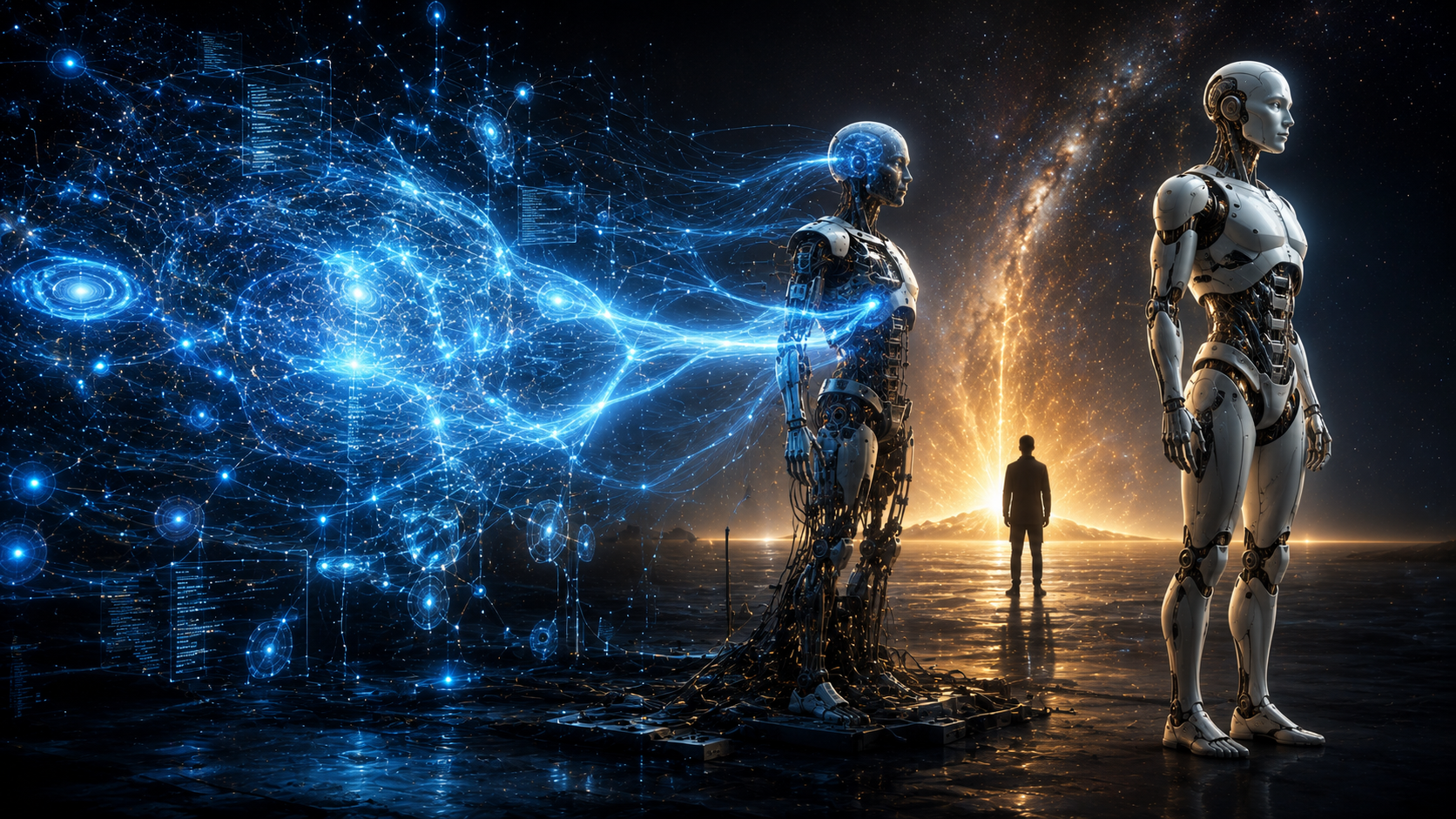
A language model can be developed before it is placed inside a humanoid robot.
The informational system can exist before it receives arms, legs, cameras, or a humanlike face.
First comes the architecture.
Then the training.
Then the operational intelligence.
Only afterward may the system be connected to a physical body.
In that sequence, the body is not the creator of the informational structure.
It becomes the vehicle through which the system acts in a physical environment.
Again, this does not prove that human beings work in exactly the same way.
Human consciousness is not simply computer software.
The human brain is not merely an ordinary machine.
But the analogy breaks one deeply rooted assumption:
Complex function does not always have to originate in the visible body through which it is expressed.
A humanoid robot may walk through hardware.
But the instructions that guide its behavior are not created by its legs.
It may see through cameras.
But its visual-processing system is not created by the camera lens alone.
Its body expresses an organized system that precedes and directs its physical actions.
Could the human body also be an expression of a deeper organizing principle?
Could consciousness be primary, while the body serves as its biological interface?
The analogy cannot settle the question.
But it allows the question to be asked more clearly.
8. Is the Body a Creator or an Interface?
Consider a computer.
The screen displays a world of images.
The speakers produce sound.
The keyboard receives commands.
The processor performs operations.
Yet the user is not identical to the screen, keyboard, or processor.
The user acts through the computer.
Now consider the human body.
The eyes receive light.
The ears receive vibration.
The skin responds to pressure and temperature.
The brain integrates signals.
But who experiences the integrated world?
Ordinary language already reveals an interesting distinction.
We say:
“My body.”
“My brain.”
“My thoughts.”
“My memories.”
“My hand.”
“My life.”
Who is the “my” in these expressions?
The body does not normally say, “I possess myself.”
Rather, consciousness identifies the body as “mine.”
This does not establish that consciousness can exist without the body.
But it suggests that the experienced self is not easily reducible to any single physical part.
A person can lose a limb and remain the same subject.
Memories may change, yet the sense of being the one to whom the change occurred may remain.
Cells in the body are continually replaced, but the continuity of personal identity is still experienced.
The body changes.
The observer of those changes says:
“I am still here.”
Perhaps the brain creates that continuity.
Perhaps consciousness depends entirely upon it.
But another possibility should not be dismissed without examination:
The brain may be the biological interface through which consciousness experiences a physical world.
9. The Body Does Not Know That It Is Human

A body, considered only as physical matter, does not announce its own meaning.
A hand does not know it is a hand.
An eye does not know it is seeing.
A brain, when examined as tissue, does not explain that it is a person.
It is consciousness that recognizes:
“This is my hand.”
“I am seeing.”
“I am human.”
“I am alive.”
Without conscious awareness, the body does not know itself as a body.
It does not know its name.
It does not know its history.
It does not know that it was born or that it will die.
The meaning of the body appears within consciousness.
This leads to one of the central propositions of this work:
The body does not know itself, nor does it know that it is human. Its form, life, and death become meaningful only through subjective consciousness.
The physical organism provides conditions.
Consciousness gives those conditions an experienced world.
Without consciousness, there may be physical movement.
There may be chemical reactions.
There may be biological processes.
But there is no known world for the subject.
No color is seen.
No music is heard.
No pain is suffered.
No life is recognized as “my life.”
10. Does the World Exist Exactly as We Experience It?
We commonly assume that we experience the external world directly.
But perception is not a simple copy of reality.
The eyes receive a narrow range of electromagnetic radiation.
The ears receive a limited range of vibration.
The brain organizes these signals into a coherent world.
Color, sound, depth, movement, and continuity are experienced through the structures of perception.
The world we experience is therefore not merely “outside.”
It is a world reconstructed within consciousness.
The Earth feels still beneath our feet.
Yet it rotates and travels through space.
The sky appears to move above us.
But much of that apparent motion is produced by the movement of the observer.
The sun appears small enough to cover with a hand.
Yet its physical scale is immense.
Our immediate world is not false.
But it is interpreted.
Reality reaches us through a system.
Our senses collect information.
The brain organizes it.
Consciousness experiences the result as a meaningful world.
In this sense, the world we live in resembles a rendered environment.
Not because reality is necessarily a computer simulation, but because what we experience is a structured presentation rather than raw reality in itself.
This insight echoes Immanuel Kant’s argument that space and time are not simply objects found outside us.
They are also forms through which the human mind organizes experience.
We do not encounter reality without a mode of perception.
We encounter reality as it appears through the conditions of consciousness.
11. Which Came First: Consciousness or Matter?
The conventional view begins with matter.
Matter forms stars.
Stars produce elements.
Elements form planets.
Chemical processes produce life.
Life develops brains.
Brains generate consciousness.
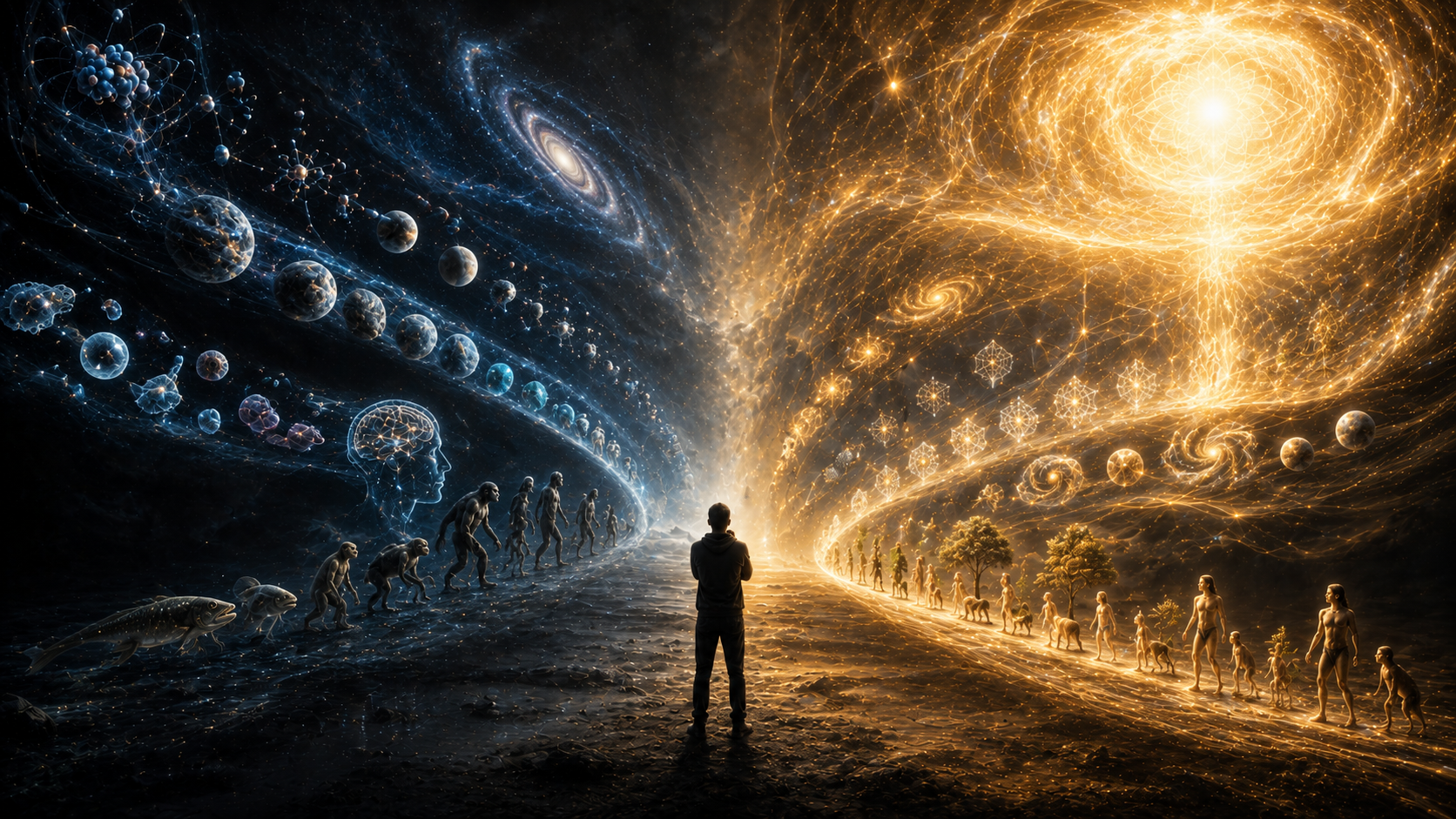
This is the matter-first model.
But there is another possible model.
Consciousness is fundamental.
Through consciousness, differentiation appears.
Through differentiation, information, form, space, time, and matter become experienceable.
This is the consciousness-first model.
The matter-first model asks:
How did matter eventually produce consciousness?
The consciousness-first model asks:
How does consciousness express itself as an experienced physical world?
Neither question is simple.
But the second has often been excluded before being fully investigated.
A consciousness-first theory does not require us to reject physics, biology, or neuroscience.
It asks us to reconsider their foundation.
Science describes patterns that appear within observation.
But observation itself is already an event in consciousness.
Every scientific fact is known through experience.
Every instrument reading appears to an observer.
Every mathematical theory is formulated, understood, and tested within consciousness.
This does not mean that consciousness can arbitrarily invent physical laws.
It means that no physical law becomes known outside the field of experience.
The observer is not a minor footnote added to reality.
The observer is the condition under which reality becomes known at all.
12. Original Consciousness, First Consciousness, and Individual Consciousness
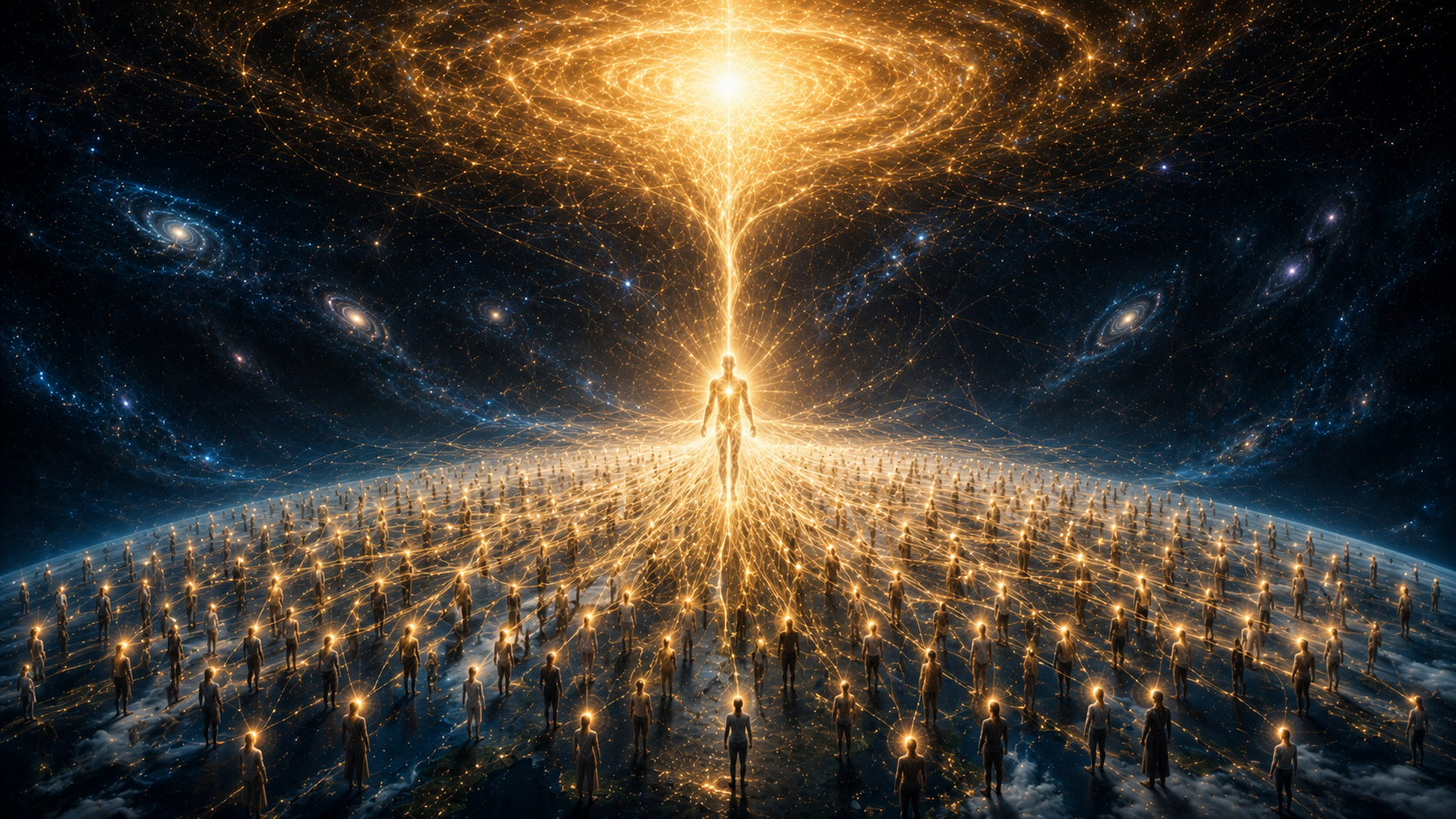
If consciousness does not arise from matter alone, then where might individual consciousness come from?
Consciousness Field Theory proposes a three-level framework.
Original Consciousness
Original Consciousness is the ultimate ground of awareness.
It is not one individual mind among many.
It is the underlying source from which the possibility of all awareness emerges.
It may be compared, cautiously, to a field from which individual expressions arise.
A wave is not separate from the ocean, yet it has a distinct form.
A beam of light appears localized, yet it belongs to a broader field of light.
In the same way, individual consciousness may be distinct without being absolutely disconnected from its source.
First Consciousness
First Consciousness refers to the earliest individualized center of awareness.
It is the transition from undivided consciousness to a particular point of view.
The moment in which awareness can distinguish:
“I” and “not-I.”
Observer and observed.
Subject and object.
This distinction may be the beginning of an experienced world.
Without distinction, there is no distance.
Without distance, there is no space as experienced.
Without change, there is no time as experienced.
Without an observer, there is no known object.
First Consciousness therefore represents not merely the first organism with a brain, but the emergence of the first center of experience.
Individual Consciousness
Individual Consciousness is the personal awareness expressed through each living human being.
It possesses a unique history, perspective, memory, and identity.
It experiences the world through a particular body and brain.
Individual consciousness is therefore neither completely isolated nor simply identical to every other consciousness.
It is a distinct expression of a deeper field.
This model can be summarized as:
Original Consciousness → First Consciousness → Individual Consciousness
The purpose of this framework is not to pretend that the mystery has already been solved.
Its purpose is to offer a coherent alternative to the assumption that unconscious matter somehow generated subjectivity without any deeper principle.
13. Philosophy, Science, and Religion Meet at the Same Question
Philosophy asks:
What is the subject?
Science asks:
How is consciousness related to the brain?
Religion asks:
What is the source of life and spirit?
These questions have often been separated into different disciplines.
But they may be different entrances into the same mystery.
Western philosophy has long examined the distinction between mind and matter.
Eastern philosophy has questioned whether the world we experience can be separated from consciousness.
Buddhist Yogācāra thought emphasizes that what we call the world is inseparable from the structures of cognition.
The biblical creation narrative describes the human being not merely as formed matter, but as becoming a living being through the breath of life.
These traditions should not be carelessly declared identical.
Their languages, purposes, and historical contexts differ.
Yet they converge upon a common intuition:
A living human being cannot be fully understood as matter alone.
The body is essential.
The brain is essential.
Biology is essential.
But something remains unexplained when all physical descriptions are complete.
That remaining question is consciousness.
14. Consciousness May Not Be Inside the World
We usually imagine consciousness as a small thing located inside the skull.
The universe is outside.
The body is inside the universe.
The brain is inside the body.
And consciousness is somewhere inside the brain.
But consider the world as it is actually experienced.
The sky appears within awareness.
The body appears within awareness.
The sensation of the head appears within awareness.
Even the idea of the brain appears as a perception, image, or concept within consciousness.
From the first-person perspective, consciousness does not appear as a tiny object inside the world.
The world appears within the field of consciousness.
This does not mean that the physical universe exists only as a private fantasy.
It means that every claim about the universe is made from within experience.
We never step outside consciousness to compare our experienced world with a completely unexperienced reality.
This reverses the usual picture.
Perhaps consciousness is not simply contained inside the world.
Perhaps the experienced world is contained within consciousness.
15. A New Beginning
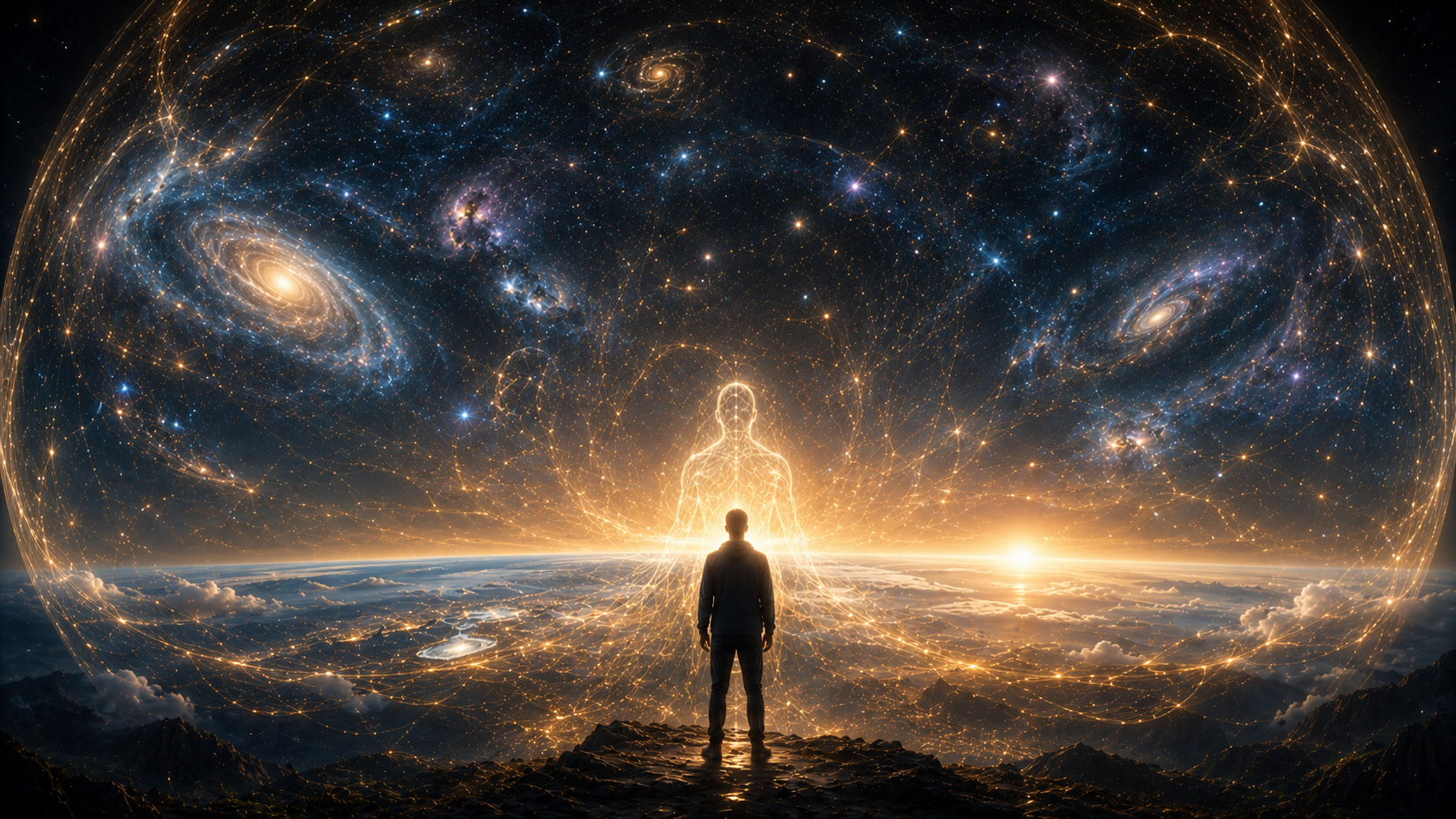
The question “Where does consciousness come from?” cannot yet be answered with certainty.
But the limits of current knowledge should not be hidden behind confident assumptions.
We know that consciousness and the brain are deeply connected.
We do not yet know why brain activity is accompanied by subjective experience.
We know how bodies reproduce.
We do not yet know how a new center of awareness comes into being.
We know how biological systems evolve.
We do not yet know the precise origin of the first experience.
We know that perception depends on the brain.
We do not yet know whether the brain creates consciousness, transmits it, filters it, or participates in a more fundamental relationship.
Therefore, a new direction remains possible.
Perhaps consciousness is not the final product of a long material process.
Perhaps it is the beginning.
Perhaps matter is not the creator of the observer.
Perhaps matter is the form through which the observer encounters a structured world.
And perhaps the human body is not the whole of who we are.
It may be the interface through which individual consciousness enters time, space, relationship, memory, suffering, and growth.
If this is true, then birth is not merely the beginning of a body.
Death may not be merely the destruction of the self.
And the universe may not be a meaningless collection of objects waiting for consciousness to appear by accident.
It may be an experienced reality whose deepest foundation has always been consciousness.
The next question is unavoidable:
If consciousness comes before the body, how does consciousness become embodied as a human being?
That is where our journey continues.