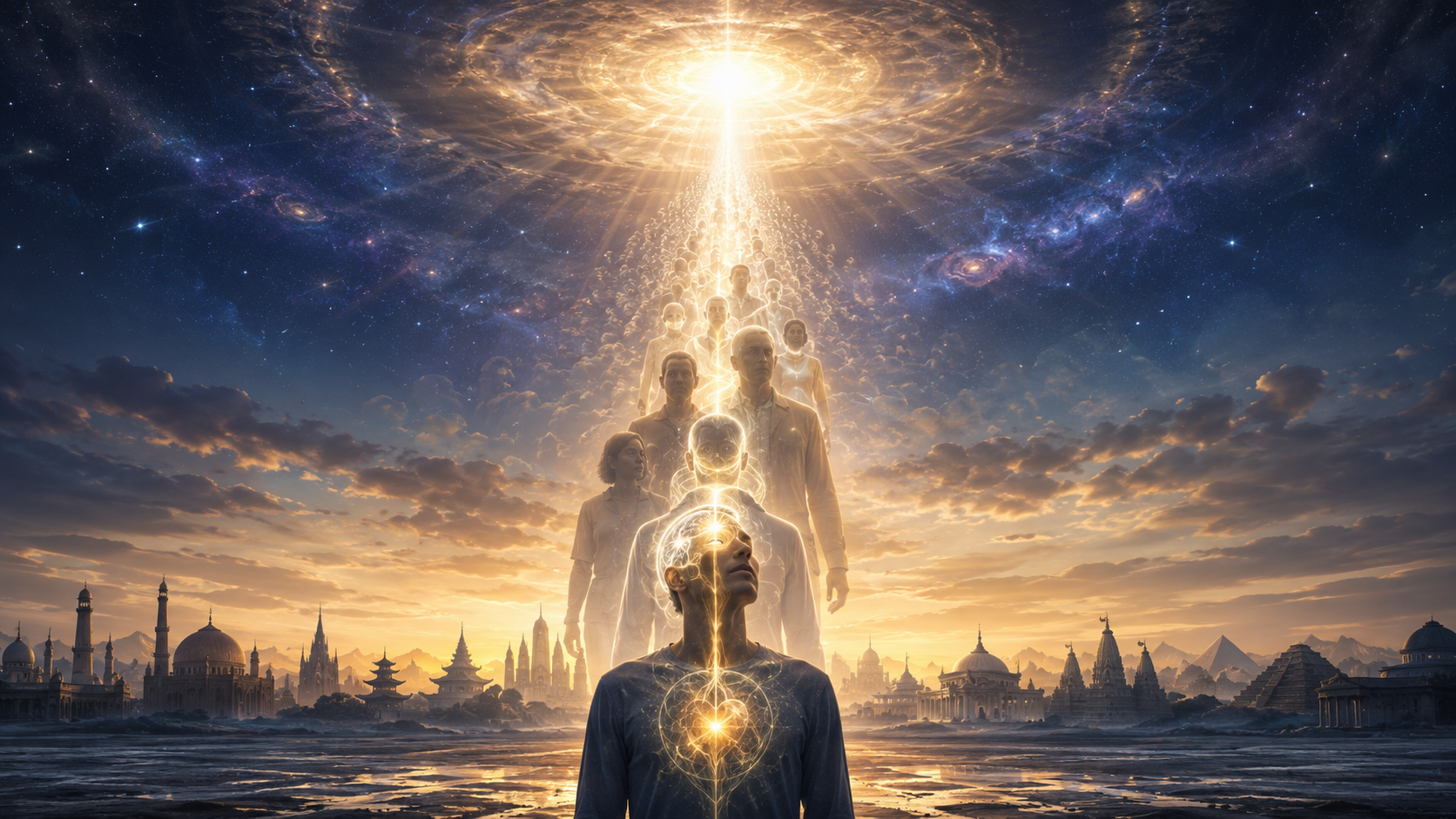
Did human beings create religion to overcome fear? Or was religion given as a path for humanity to reconnect with a forgotten source?
Religion is often explained as a human creation shaped by history and culture. Faced with natural disasters, disease, suffering, and death, early societies imagined divine powers, developed rituals, and established moral rules that helped communities survive.
There is truth in this account. Religious institutions, scriptures, rituals, and traditions have all taken form through human languages and cultures. At times, religion has also joined forces with political power and been used to control people.
Yet saying that “humans created religion” does not settle the deeper question.
Who, then, is the human being who created religion?
Are we merely physical bodies that are born, age, and die? Or is consciousness—the capacity to see, feel, think, experience, and ask what life means—central to what it means to be human?
Our bodies change from generation to generation, yet the lineage of life reaches us through our parents and ancestors. Language, memory, values, and religious traditions also pass from one generation to another.
If we follow this lineage backward, we eventually encounter a deeper question: Where did the first human consciousness come from?
Cheonbong Consciousness Field Theory uses the term Original Consciousness for the fundamental ground from which life, awareness, experience, and creation could become possible.
From this perspective, the purpose of religion is not merely to believe in an unfamiliar God somewhere outside ourselves. Religion can also be understood as a path by which a human being trapped in false consciousness discovers the source, restores true consciousness, and reconnects with Original Consciousness.
This chapter does not attempt to declare one religion correct or reduce different traditions to a single doctrine. Instead, it examines the common questions beneath religion, the relationship among consciousness, mind, spirit, and soul, and the possible relationship between revelation, God, human consciousness, and Original Consciousness.
1. What Does Religion Really Ask?
Religion may bring to mind churches and temples, worship and prayer, meditation and spiritual practice. For one person it offers comfort; for another, moral discipline; for another, a path toward truth.
Religion asks fundamental questions
The Korean term for religion, jonggyo (종교), combines a character associated with what is fundamental or primary with a character meaning teaching. In this sense, religion can be understood as teaching concerned with the foundations of human life and existence.
Where did human beings come from? Why do suffering and death exist? What are good and evil? Can consciousness continue beyond death? Can human beings encounter their source again?
Philosophy asks many of the same questions. Religion, however, usually goes beyond intellectual reflection by offering ways of life involving faith, practice, awakening, transformation, or salvation.
What is religion trying to change?
Religion asks not only what a person believes, but what kind of person that belief should produce. Christianity speaks of love, rebirth, truth, and salvation. Buddhism teaches a path beyond ignorance and attachment toward awakening. Confucian traditions emphasize human responsibility and the cultivation of character.
Their doctrines are different, but each challenges the idea that human beings should simply remain governed by ignorance, selfish desire, and an unexamined way of life.
The purpose of religion, therefore, cannot be reduced to changing one’s religious label. At its deepest level, religion seeks a transformation of consciousness and of the direction of life.
Has material civilization answered religion’s questions?
Science has transformed human life. It treats disease, explores the universe, and reveals mechanisms of nature that previous generations could scarcely imagine. Yet technological progress has not automatically resolved the deepest problems of the human interior.
Science can measure activity in the brain, but measurement alone does not tell us what we ought to live for, why love matters, or how hatred should be overcome.
Religion persists partly because the deepest human questions are not exhausted by material conditions. This leads to another possibility: perhaps religion can be understood as a form of reconnection.
2. Does Religion Really Mean “To Reconnect”?
The etymology of the English word religion is debated. Some traditions connect it with Latin terms associated with careful observance or reconsideration, while another influential interpretation connects it with religare, “to bind again.”
It would be misleading to claim that “reconnection” is the single uncontested etymology. Philosophically, however, the idea offers a powerful question about the purpose of religion.
Reconnection implies separation
To reconnect implies that some relationship once existed but has become broken, obscured, or forgotten.
Christianity describes the separation between God and humanity through the language of sin and the Fall, and understands salvation as the restoration of that relationship. Buddhism does not employ the same doctrine of a Creator God, yet it diagnoses human beings as unable to see reality clearly because of ignorance and attachment.
These traditions should not be collapsed into one theology. They can, however, be compared in one important respect: both see ordinary human existence as requiring profound transformation.
What is being reconnected?
Different traditions may describe reconnection as the relationship between God and humanity, truth and humanity, or the original mind and the present mind.
Cheonbong Consciousness Field Theory interprets this question through the relationship between Original Consciousness and individual consciousness.
Original Consciousness does not mean one gigantic person thinking every individual’s thoughts. It refers to the fundamental ground from which life and consciousness can arise. Individual consciousness receives life from that source and experiences the world through a particular body, history, and perspective.
When human beings forget the order of life and make private desire the center of everything, the separation deepens. From the Cheonbong perspective, the purpose of religion is to recognize this separation and restore the relationship with the source.
Can religious form replace religious purpose?
Prayer, worship, meditation, scripture, and spiritual discipline can be important forms of religious life. Yet forms are paths toward a destination; they are not necessarily the destination itself.
A person may read scripture for decades without overcoming greed, falsehood, hatred, or pride. If religion is about transformation, its deepest question is what actually changes within the human being.
3. Are Consciousness, Mind, Spirit, and Soul the Same?
These words often overlap, but they do not always mean the same thing. Their meanings vary across philosophy, psychology, religion, language, and historical period.
Consciousness and mind
Consciousness can be understood as the capacity to see, hear, feel, think, and experience oneself and the world. Eyes receive light, but eyes themselves do not know what they see. Ears receive vibrations, but ears do not understand the beauty of music.
The mind can be understood as the movement of thoughts, emotions, desires, intentions, and memories within conscious experience. If consciousness is the field in which experience becomes present, mind is much of what moves within that field.
What do we mean by spirit?
Depending on context, spirit may emphasize rational judgment, character, values, or a dimension of human life that relates to what transcends the merely physical.
What question does the soul raise?
Religious language about spirit and soul often raises the question of whether human life and identity extend beyond the physical body. Christianity may speak of a human spiritual dimension capable of relationship with God. Buddhism does not affirm a permanent soul in the same way, yet it addresses consciousness, karma, birth and death, and liberation.
These concepts should not be forced into equivalence. Cheonbong treats consciousness as the broadest ground of experience, mind as movement within it, and spirit as language that can point toward value, direction, and the relationship between consciousness and the source of life.
4. Why Is Human History Also a History of Consciousness?
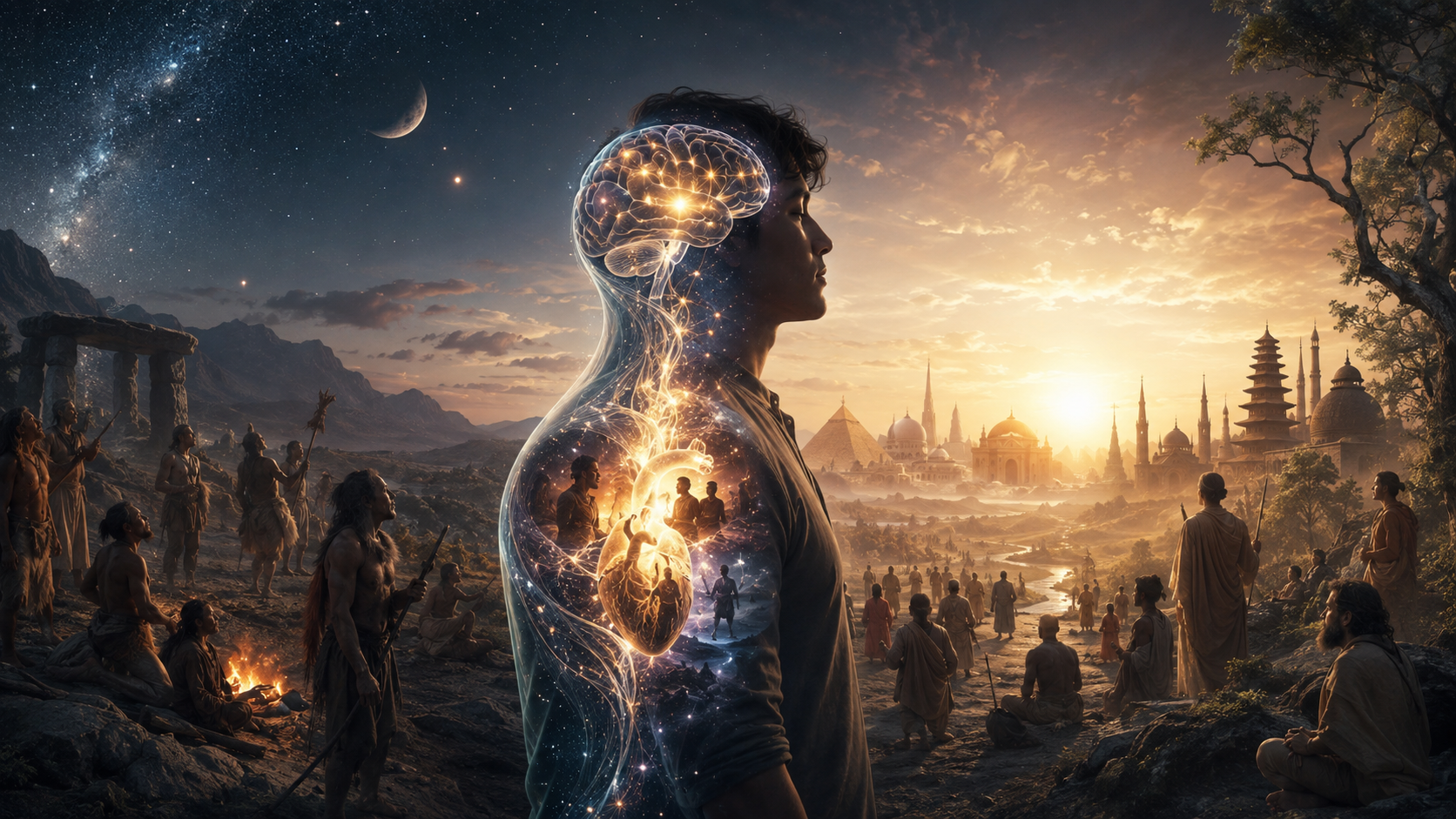
We usually learn history through nations, wars, institutions, inventions, and civilizations. Yet behind all these developments stands human consciousness.
Tools, laws, philosophy, religion, science, and art did not assign meaning to themselves. Human consciousness observed nature, interpreted experience, and gave purposes to things.
Bodies disappear, but the lineage of life continues
Countless human beings have lived and died. The bodies of our ancestors are gone, yet our existence shows that the biological lineage of life continued through them to us. Language, education, memory, and culture also transmit contents of consciousness across generations.
This cultural continuity should not be confused with biological inheritance. Yet human history clearly contains a transgenerational history of consciousness.
Who turns the past into history?
Rocks and fossils can remain without human observers. But consciousness reads them as traces of the past, arranges them in time, and calls the resulting account history.
A stone does not call itself a stone. Matter does not announce that it has created civilization. Human history is also the history of what consciousness has perceived, interpreted, valued, and created.
Does the lineage of consciousness prove Original Consciousness?
No. Tracing our ancestry backward does not scientifically prove Original Consciousness. Cheonbong presents Original Consciousness as a philosophical hypothesis arising from deeper questions about the continuity of life and the emergence of conscious experience.
How did consciousness first appear? How did physical processes give rise to a subject capable of experience, meaning, and self-awareness?
Cheonbong places the concept of Original Consciousness at the deepest point of this inquiry. But not everything carried through human consciousness is necessarily true. This is why a distinction between true consciousness and false consciousness becomes necessary.
5. What Is the Difference Between True Consciousness and False Consciousness?
People can witness the same event and interpret it differently because desire, fear, memory, prejudice, and previous experience shape judgment.
Cheonbong calls consciousness that faithfully reflects the direction of life and truth in Original Consciousness true consciousness. Consciousness dominated by desire, falsehood, prejudice, and distorted knowledge is called false consciousness.
What is true consciousness?
True consciousness does not mean that an individual knows everything or can never make a mistake. It means remaining open to truth, admitting what one does not know, and placing life, conscience, love, and truth above selfish desire.
True consciousness is not power for dominating others. It seeks harmony with the source while respecting one’s own life and the lives of others.
How does false consciousness arise?
False consciousness does not mean that humans are born completely evil. We grow by absorbing language, knowledge, values, wounds, assumptions, desires, and sometimes misinformation.
False consciousness becomes stronger when a person treats a limited perspective as absolute truth and condemns everyone who sees differently. Even religious language can serve false consciousness when it enlarges greed, domination, or pride.
How can true consciousness be recognized?
Does it protect life? Does it choose truth over falsehood? Does it restrain desire rather than endlessly expand it? Does it seek coexistence rather than domination? Do words and actions agree?
In Cheonbong thought, true consciousness cannot be established by assertion alone. It must become visible in the life, relationships, and actions that consciousness produces.
6. Why Did Religion Arise? Human Need and the Call of Original Consciousness
The claim that humans created religion and the claim that religion contains revelation from a deeper source need not always be treated as mutually exclusive.
The external origin of religion
Human beings feared disease, disaster, suffering, and death. They created myths, rituals, moral rules, and institutions to explain difficult phenomena and preserve social order. Humans wrote scriptures, built places of worship, and organized religious communities.
In this historical sense, religion is undeniably shaped by human culture.
The inner origin of religion
Yet human need alone does not fully explain why people repeatedly ask about eternity, truth, salvation, awakening, good and evil, sacrifice, and what may lie beyond death.
Cheonbong interprets these questions as signs that consciousness contains an orientation toward its source. Humans may have constructed the external forms of religion, while the inner search for the source cannot simply be dismissed as arbitrary invention.
Can human language and the intention of Original Consciousness coexist?
Even if revelation or awakening comes from a deeper source, human beings hear it, interpret it, record it, and transmit it. Religious traditions may therefore contain both an originating message and layers of human language and cultural interpretation.
Cheonbong proposes that while the external forms of religion arose within human history, Original Consciousness may have expressed its intention through human consciousness.
This is not presented as an established scientific fact. It is a philosophical and religious hypothesis that must be examined critically. That raises the next question: how could revelation be distinguished from ordinary human claims?
7. When Is Revelation Opened? Prophecy, Fulfillment, and Verification
If religion claims to contain teachings from Original Consciousness, some standard is needed for distinguishing revelation from ideas created by human beings.
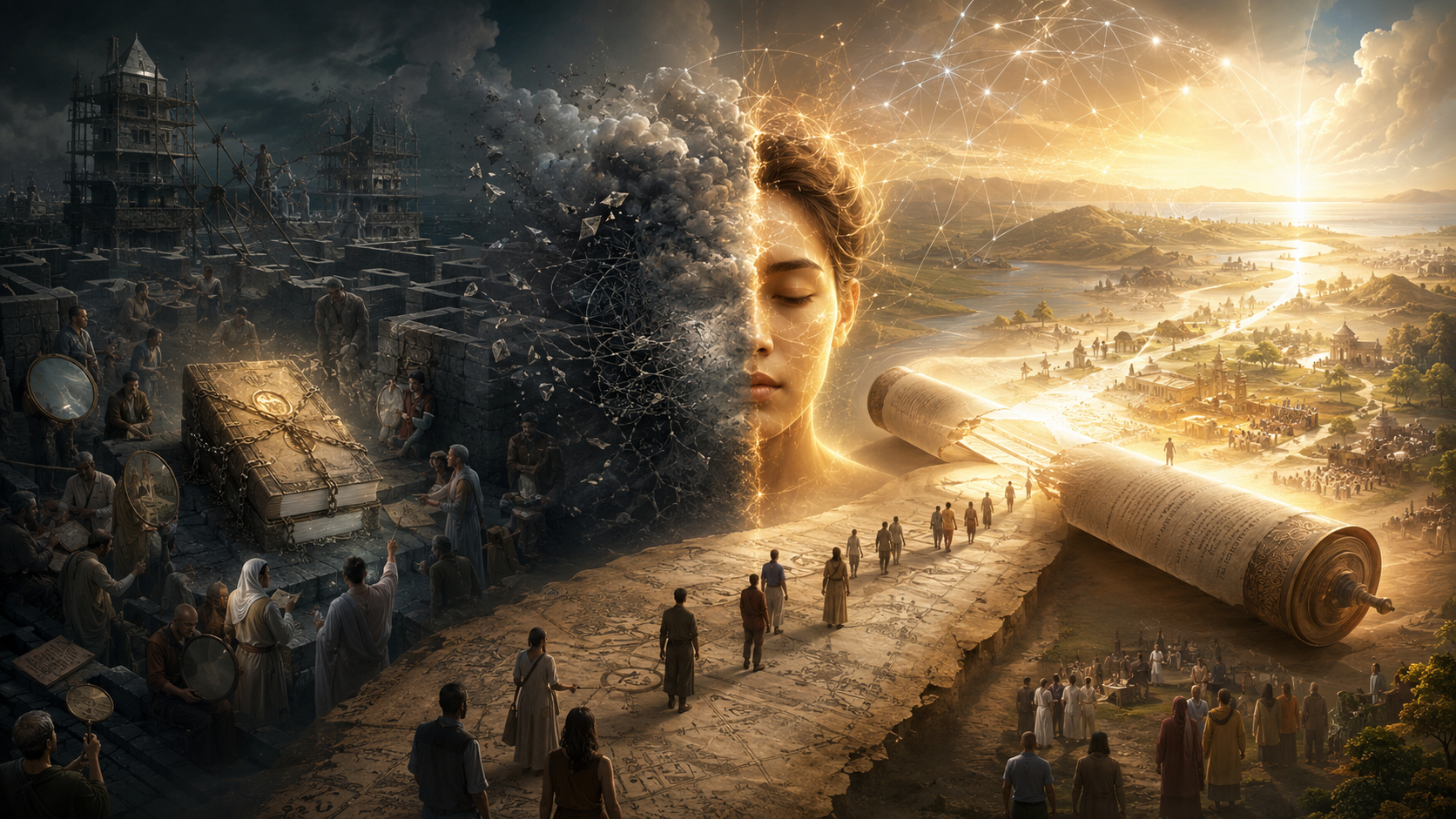
Cheonbong approaches revelation through a sequence of prophecy, sealing, fulfillment, verification, and disclosure.
How are prophecy and fulfillment connected?
Prophecy announces something before its fulfillment. Sealing means that its full meaning remains hidden or incomplete until the relevant events occur. Fulfillment is the appearance of what was promised in actual events, while verification asks whether the prophecy and the claimed fulfillment truly correspond.
John 14:29 describes speaking beforehand so that people may believe when the event occurs. Deuteronomy 18:21–22 likewise raises fulfillment as a test when evaluating prophetic claims.
Therefore, saying “I received a revelation” cannot by itself establish that a revelation is true. What was predicted? When, where, and how was it fulfilled? What evidence connects the prophecy with the event?
How does a sealed word become open?
Sealing need not mean that written words are physically invisible. People may read a text and still not know what reality it points toward.
Biblical literature contains parables, mysteries, and prophetic texts whose meanings are associated with later fulfillment. Buddhist awakening and right Dharma are not the same concepts as biblical prophetic fulfillment, but they can be compared as different religious structures concerned with the disclosure of truth beyond ordinary perception.
How should revelation be tested?
A claim of revelation should not arbitrarily rewrite the text or context on which it depends. Revelation 22’s warning against adding to or taking away from prophetic words can also be read as a warning against manipulating a text to fit an interpreter’s desire.
Cheonbong compares prophecy to a blueprint. If the blueprint is continually altered, the completed building can no longer be meaningfully compared with the original design.
True revelation, therefore, cannot rest solely on the authority of the interpreter. Text, event, evidence, and testimony must be examined together, along with the kind of life and moral fruit produced by the claimed revelation.
8. Can We Explain Consciousness While Denying God?
Many people reject belief in God or a Creator while accepting that human consciousness exists. There is no logical contradiction in doing so.
Scientists themselves use consciousness when observing, measuring, interpreting, and constructing explanations. Scientific laws become known to us through conscious observation and conceptual understanding.
Does the scientist stand outside consciousness?
A telescope gathers light from the universe, but a conscious observer interprets the measurements. A microscope magnifies cells, but consciousness classifies and gives meaning to what is observed.
Materialist accounts commonly explain consciousness as arising from complex neural processes. This is a serious scientific possibility. Yet the question of how physical neural activity becomes subjective experience—the felt redness of red, pain, love, selfhood, and meaning—remains a major philosophical and scientific problem.
Consciousness does not automatically prove God. But it keeps open the question of whether matter alone provides a complete explanation of the human being.
Does human consciousness reflect something divine?
Genesis describes humanity as created in the image of God. Acts 17 speaks of human beings as God’s offspring. John 10:34–35 includes the striking quotation, “you are gods,” in connection with those to whom the word of God came.
These passages do not mean that every human being is literally the omnipotent Creator. Traditional Christian interpretations and Cheonbong’s philosophical interpretation must be distinguished.
Cheonbong reads such passages as opening the possibility that human consciousness reflects qualities or capacities originating in Original Consciousness. Receiving the word does not make a human being the Absolute; it signifies a movement away from false consciousness and toward truth and life.
What must a worldview without a Creator explain?
A person who does not believe in a Creator does not thereby deny parents, ancestors, or consciousness. To argue otherwise would oversimplify the issue.
Materialism proposes that life and consciousness emerged through natural physical processes. Religious worldviews locate creative mind, divine agency, or sacred principle at the source.
Cheonbong asks a question between these positions: Did matter exist first and eventually generate consciousness, or is there a more fundamental ground that made consciousness possible?
A material account must ultimately explain how nonconscious physical processes produce subjective experience, selfhood, meaning, and judgments about truth. A religious believer, meanwhile, cannot stop at quoting scripture. Faith must also show what it does to consciousness and to life.
The universe is far away. Consciousness is here, now. Perhaps one of the first places to examine when asking about God is not only the distant sky, but the consciousness that looks at that sky and asks what existence means.
For a deeper discussion of the relationship between consciousness and the Consciousness Field, see Part 6, Chapter 6: What Is the Consciousness Field?
9. How Does Religion Diagnose the Human Condition?
Religion calls for transformation and salvation because it does not regard the ordinary human condition as complete.
Christianity describes humanity’s separation from God through sin and the Fall. Buddhism describes beings caught in ignorance, attachment, and the suffering associated with birth, aging, sickness, and death.
The doctrines differ, but both can be understood as diagnosing a condition in which human beings do not fully perceive truth or their deepest relationship to reality.
Is the human problem only external?
Material abundance does not automatically eliminate greed, anxiety, hatred, conflict, war, violence, deception, or discrimination. Civilization’s tools have advanced enormously, but the consciousness using those tools has not necessarily matured at the same pace.
The same technology can heal or destroy. The same religious teaching can inspire love and service or be turned into an instrument of conflict and domination.
The problem therefore lies not only in the tool, but in the consciousness that gives the tool direction and meaning.
Why does false consciousness believe it is true?
One of the most difficult features of false consciousness is that it may not recognize itself as false. People absorb assumptions from society, religion, ideology, and culture. Repetition can make an interpretation feel indistinguishable from unquestionable fact.
False consciousness selects what it wants to see and rejects evidence that threatens what it wants to believe. Religion itself is not immune. When institutional interest becomes more important than truth, religious form can become a shelter for false consciousness.
How do religions describe separation?
Christianity describes sin as separation from God and salvation as restoration of relationship with God. Buddhism explains suffering through ignorance and craving, with awakening involving freedom from ignorance and clearer perception of reality.
These teachings are not identical. Yet both challenge the idea that human beings can solve their deepest problem while leaving consciousness unchanged.
Cheonbong interprets this condition as false consciousness separated from the life and truth of Original Consciousness. The purpose of religion is therefore not merely to condemn falsehood, but to provide a path back toward true consciousness.
10. How Can Religion Lead from False Consciousness to True Consciousness?
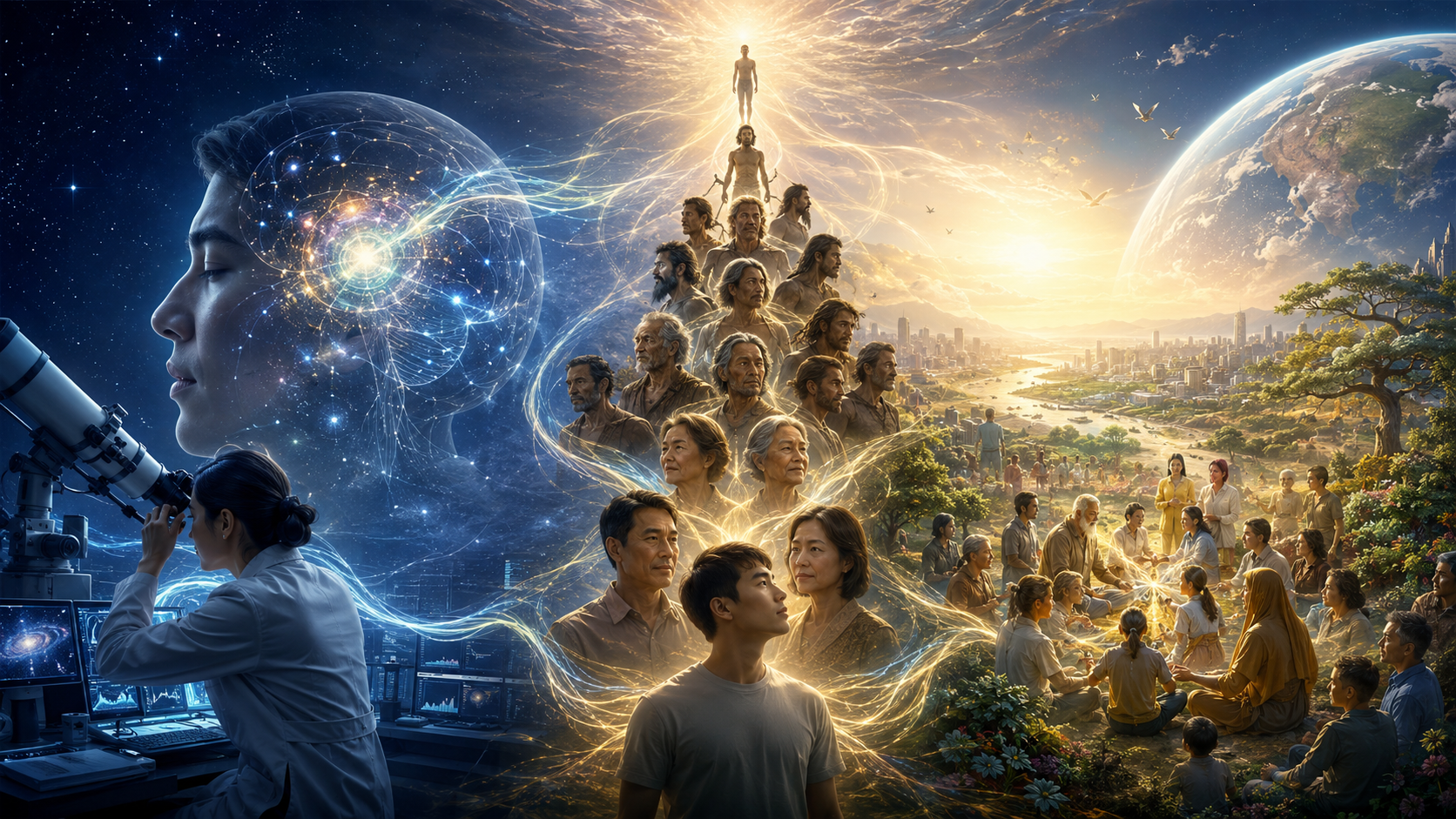
If the purpose of religion is reconnection with Original Consciousness, genuine transformation must occur within human consciousness.
Having a religious identity or reading many scriptures does not automatically transform consciousness. A person must hear truth, examine the self, correct distorted thinking and conduct, and embody what has been learned.
What do repentance and spiritual practice change?
In Christianity, repentance is more than feeling regret. It involves turning one’s thinking and life toward God and truth. Rebirth likewise points beyond a change of religious status toward becoming a different kind of person.
Buddhist practice is also more than accumulating knowledge. Meditation, ethical discipline, and wisdom involve observing desire, attachment, anger, and ignorance and learning freedom from their domination.
Repentance and Buddhist practice have different doctrinal meanings. Yet they can be compared in one respect: both reject the assumption that the present condition of consciousness should simply justify itself.
Why does truth require transformation?
Truth is not merely information stored in the mind. A person who learns love but continues to cultivate hatred possesses knowledge about love without necessarily embodying it. A person who teaches honesty while lying for personal advantage has not yet made truth a way of life.
True knowledge changes consciousness and action. In the Cheonbong perspective, receiving the word means more than remembering sentences. It means allowing the life and order of Original Consciousness to redirect one’s consciousness and conduct.
How does true consciousness appear in life?
True consciousness cannot be proven merely by mystical experience or a special spiritual title. Someone who claims awakening while humiliating and dominating others should have that claim examined. Someone who claims the Holy Spirit while remaining committed to deception and greed must likewise be evaluated by the fruits of life.
True consciousness protects life, chooses truth over falsehood, follows conscience rather than endless desire, and seeks ways to live with others rather than above them.
The purpose of religion is not escape from reality. It is to live within reality through transformed consciousness. Change consciousness and relationships can change; change relationships and communities can change; change the consciousness of communities and the world human beings create can also change.
11. Religion’s Prophecy of Reconnection with Original Consciousness
Religions do not speak only about the individual’s search for truth. Many also contain expectations that hidden truth will be revealed, humanity’s relationship with the source will be restored, or a new age will begin.
Christianity contains traditions concerning the Messiah, the Kingdom of God, the Holy Spirit, and a new heaven and new earth. Buddhism contains teachings concerning future Buddhas, Maitreya, right Dharma, and awakening. Korean religious traditions also contain expectations concerning heaven’s will, transformative figures, and the opening of a new age.
These prophecies should not simply be declared descriptions of the same event. Their scriptures, histories, concepts of salvation, and theological frameworks differ. Yet they can be compared through a deeper question: toward what transformation of human beings and the world do they point?
Why does a savior appear in human form?
Christianity describes the Word becoming flesh and dwelling among humanity. Jesus lived in a human body while Christian faith understands him in relation to God’s Word and Spirit.
The Buddha likewise appears within human life, encounters suffering, practices, awakens, and teaches a path. Teachings about a future Buddha also remain connected with the human world rather than existing only as abstract speculation.
From the Cheonbong perspective, the decisive question is not simply the outward appearance of a person. What truth has entered that person’s consciousness? What has been fulfilled? What path is being shown?
Are Maitreya, the Messiah, and Jeong Do-ryeong the same figure?
They should not be identified merely because each can be associated with expectations of salvation or a new age. Maitreya must be understood within Buddhist teachings about the future Buddha. The Messiah must be examined within biblical covenant, prophecy, and the Kingdom of God. Jeong Do-ryeong and ideas of a later-world transformation must be studied within Korean religious and historical contexts.
Cheonbong instead asks comparative questions. From what does each promised figure save humanity? What truth is brought? How does that truth transform consciousness? And how is the relationship between humanity and the source restored?
Is reconnection a journey through space or a transformation of consciousness?
Reconnection with Original Consciousness need not mean traveling physically to another location in the universe. If the Kingdom of God or the Buddhist “other shore” is understood only as a place reached after death, transformation of present consciousness and present life can become secondary.
Cheonbong interprets reconnection as a movement from false consciousness toward true consciousness: from desire, falsehood, ignorance, and hatred toward truth, life, love, and conscience.
This transformation does not remain inside the mind. When consciousness changes, perception, judgment, relationships, and action also change. Encountering Original Consciousness becomes both an inner event and a starting point for transforming the world human beings create.
12. What Kind of World Could an Encounter with Original Consciousness Open?
If the ultimate purpose of religion is reconnection with Original Consciousness, that encounter does not end with private salvation.
When individual consciousness changes, the way we treat other people changes. When many people change, social values, institutions, culture, and civilization can also change.
In Cheonbong Consciousness Field Theory, a new world does not mean only a completed physical world suddenly descending from the sky. It can also mean a reality newly created by human beings who reconnect with Original Consciousness and live through true consciousness.
Where are the “other shore” and the new heaven and new earth?
In Buddhism, the metaphor of the “other shore” points toward liberation from ignorance, attachment, and the suffering of cyclic existence. Crossing from this shore to the other is not merely geographical movement; it expresses transformation from ignorance toward awakening.
The Book of Revelation speaks of a new heaven and a new earth and of God dwelling with humanity, where death, mourning, and pain no longer define existence.
Buddhist liberation and Christian eschatology are not the same doctrine. Yet both can sustain hope that present suffering and separation need not be the final condition.
Cheonbong interprets this possibility as a transition from a reality dominated by false consciousness toward one increasingly shaped by true consciousness.
Who creates the new world?
A new world cannot be completed by one person’s claim. Those who say they have received truth must embody it. If they speak of love, love must transform relationships. If they speak of life, their actions must protect and sustain life.
When individuals change, families and communities can change. When communities change, politics, economics, education, and culture can move in new directions.
Our present material civilization is itself a product of human consciousness. If war, destructive competition, greed, and exploitation are expressions of consciousness, then peace, cooperation, respect for life, and harmony can also be created through transformed consciousness.
Does absolute knowledge mean knowing everything?
Religious traditions often speak of overcoming ignorance and coming to know truth. Cheonbong interprets this as moving beyond the limitations of false consciousness through encounter with Original Consciousness.
But “absolute knowledge” should not casually be taken to mean that one individual possesses every piece of information in the universe or can never make a mistaken judgment.
True knowing should not inflate the self. It should deepen understanding of life and truth and become visible in practice.
If an encounter with Original Consciousness is genuine, its result should not be greater arrogance or domination. It should move toward respect for life, rejection of falsehood, and the reconnection of divided human beings.
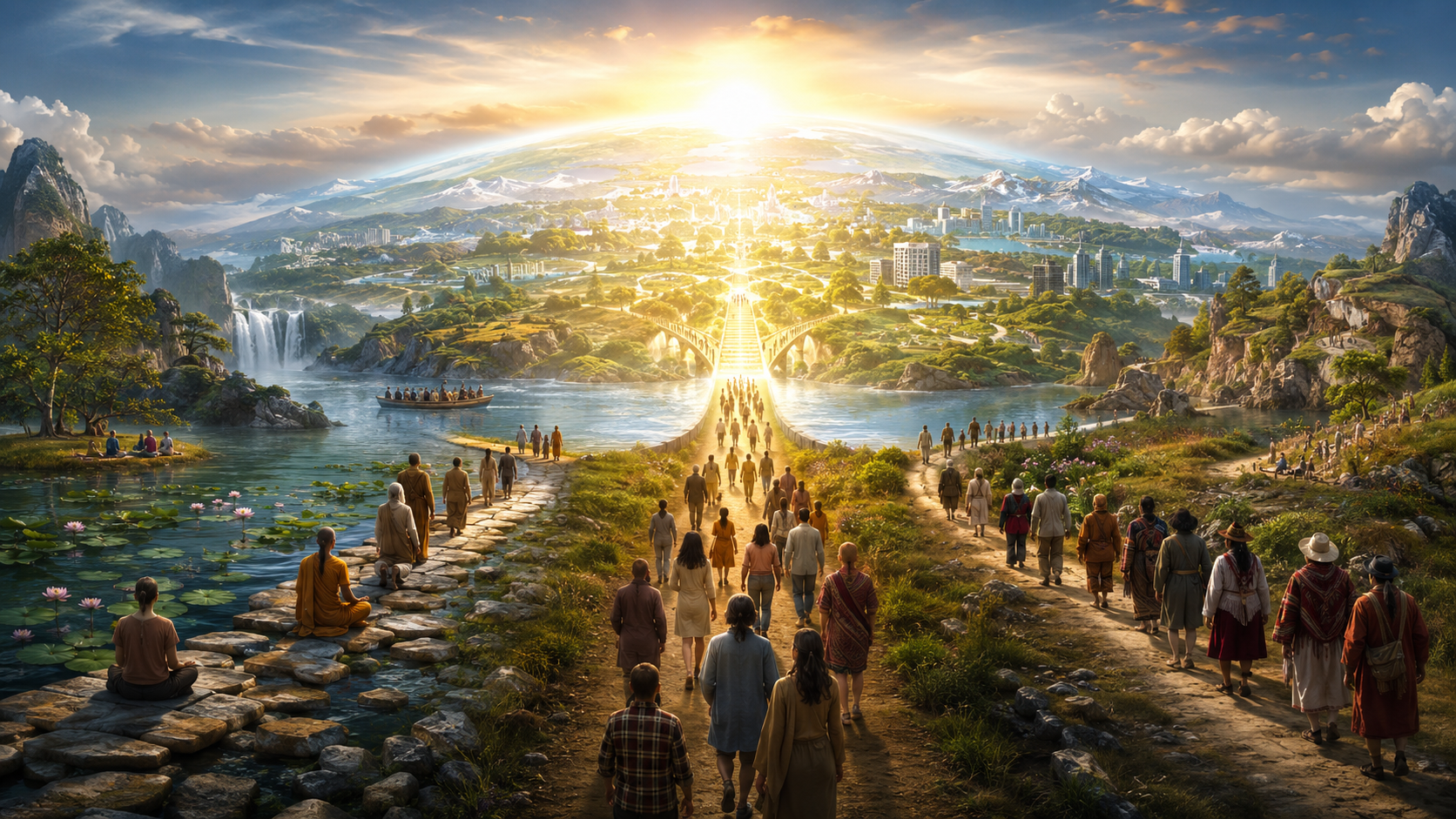
Epilogue | The Purpose of Religion Is Not Belief Alone, but the Restoration of Connection
Did human beings create religion, or did religion come from Original Consciousness?
The question cannot be answered adequately in a single sentence.
Religious languages, institutions, rituals, and organizations developed within human history and culture. Humans sought ways to confront fear, death, social disorder, suffering, and the need for meaning.
Yet another question remains: why have human beings repeatedly looked beyond survival toward eternity, truth, awakening, salvation, love, sacrifice, and the source of existence?
Cheonbong Consciousness Field Theory proposes that religion has both an external and an internal origin. Externally, human beings created religious forms. Internally, religion begins in consciousness seeking its source, Original Consciousness.
Religion concerns more than the body. It deals with consciousness, mind, spirit, soul, and the question of how human beings should change.
Christianity speaks of restoring the relationship between God and humanity. Buddhism speaks of liberation from ignorance and attachment and of awakening. Other religious traditions offer their own visions of truth, salvation, and a transformed age.
These doctrines are not identical, and their differences should not be erased. Yet they share a profound question: must human beings remain trapped within desire and ignorance, or can consciousness encounter a deeper truth and be transformed?
In the Cheonbong perspective, the purpose of religion is not to invent another external idol. It is for human beings caught in false consciousness to recognize their condition, restore true consciousness, and reconnect with Original Consciousness.
Such reconnection cannot be established merely by reading scripture or claiming revelation. Claims about revelation must be examined through prophecy, fulfillment, evidence, experience, and the fruits they produce in human life.
For those who do not believe in God, the mystery of consciousness remains: how do subjective experience, selfhood, love, conscience, meaning, and judgments of truth arise from nonconscious matter?
For those who believe in God, another challenge remains: how has the God and truth they profess actually transformed their consciousness and their lives?
The purpose of religion is not completed by possessing the name of a faith. It is completed in the movement from separation toward connection, from falsehood toward truth, from desire toward life, and from false consciousness toward true consciousness.
And a human being reconnected with Original Consciousness cannot create exactly the same world as before. When consciousness changes, perception changes. Relationships change. Actions change. Eventually, the reality human beings create together can change as well.
The final purpose of religion is not to remove humanity from reality. It is to enable human beings to create a new reality through true consciousness.
Beginning with the next chapter, we will examine Buddhism, Christianity, and other religious traditions in greater depth: how they understand humanity’s separation from the source, and what paths of salvation, awakening, and transformation they propose.
Explore This Chapter in Three Video Formats
Why did religion arise? Is it a cultural creation shaped by human needs, or could its deepest impulse reflect a call from Original Consciousness?
And is the ultimate purpose of religion to worship a distant external power, or to move from false consciousness toward true consciousness and reconnect with the source of life?
Choose the depth that suits you and continue exploring the central question of this chapter.
2-Minute Question
[INSERT ENGLISH 2-MINUTE VIDEO HERE]
10-Minute Exploration
[INSERT ENGLISH 10-MINUTE VIDEO HERE]
Deep Philosophy Audio
[INSERT ENGLISH 20+ MINUTE AUDIO/VIDEO HERE]
Each format approaches the same philosophical question at a different depth. Begin with the short question, continue into the ten-minute exploration, or enter the full deep philosophy audio.