Where the Visible World Meets Its Invisible Order
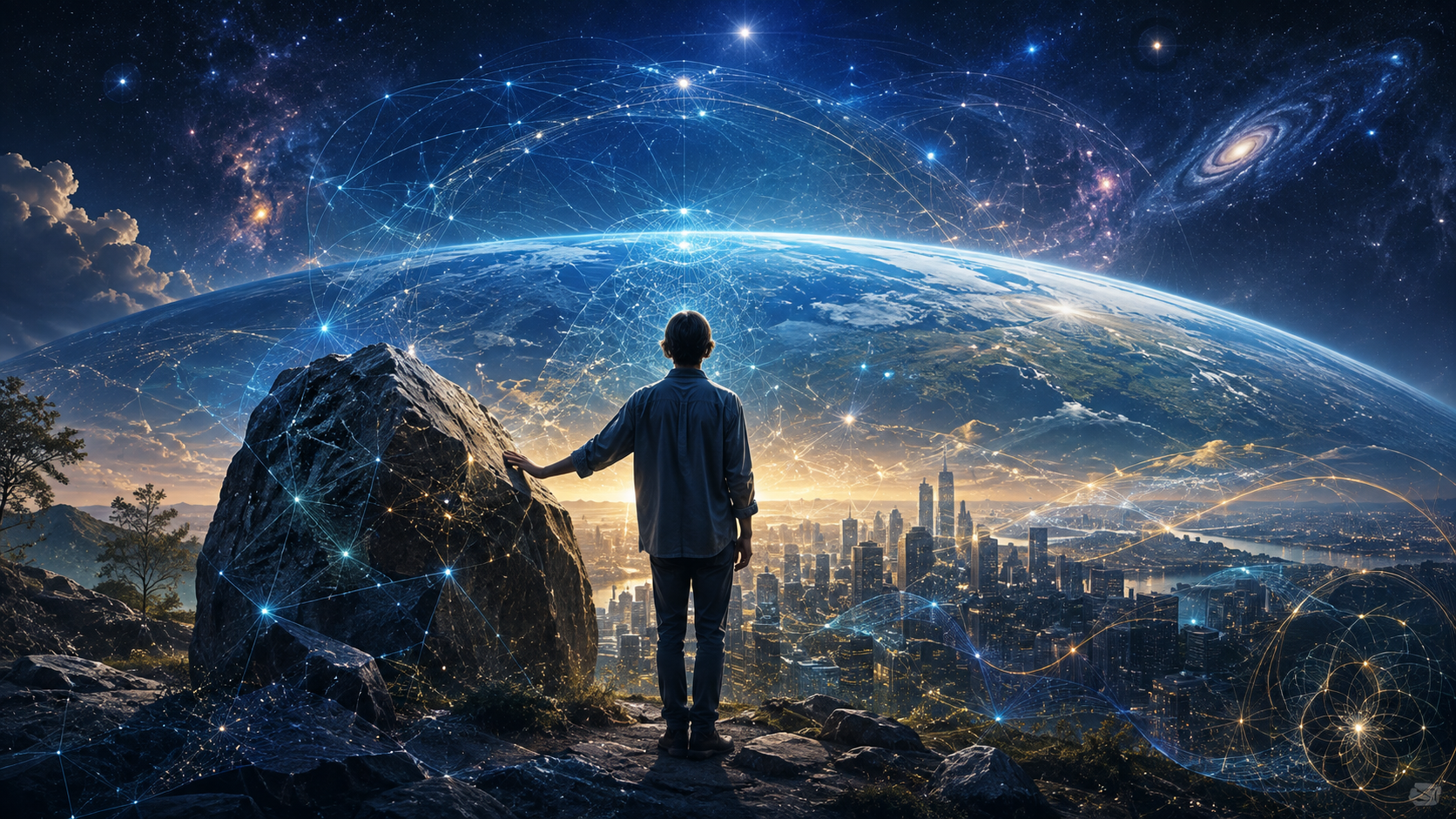
We live every day in what we call the material world. We wake in a room, feel the floor beneath our feet, open a door, and enter a world of cars, buildings, markets, hospitals, stones, heat, injury, illness, and death. This world is stable, shared, and resistant to personal wishes. Yet another question begins when we examine how that world becomes experience: How do the material world and consciousness become one reality?
The stone itself does not enter the eye. Reflected light reaches the retina, sensory systems change, neural signals travel, and then a cold, heavy, solid stone appears in conscious experience. At the same time, the Earth rotates and orbits even though it feels still beneath us, and the body carries on immense invisible activity even while it seems motionless.
For this inquiry, we will use two provisional expressions. The material world is the directly visible and tangible world of ordinary life. The world of consciousness is the domain in which relations, laws, information, memory, concepts, and meaning become known through observation, reasoning, language, mathematics, and experience. These are not necessarily two separate universes. They may be two ways in which one deeper reality appears.
This investigation continues the question raised in Part 6, Chapter 6 | What Is the Consciousness Field?, which examined consciousness as the transparent ground through which time, space, matter, and the universe become experienceable.
Table of Contents | Material World and Consciousness
- The Material World We Live in Every Day
- The Earth Looks Still, but It Is Moving
- The Body Is Quiet While Immense Motion Continues Within
- Does the Stone Enter Us, or Does Light?
- Why Kant’s Phenomenon and Thing-in-Itself Matter
- The Visible World and the Explained World
- Why Reality Does Not Feel Created by Consciousness
- The Computer Screen and the Metaphor of 0 and 1
- The Humanoid and Invisible Intelligence
- Blueprint and Building, Consciousness Field and Reality
- Logos: The Ancient Insight That Meaning and Order Shape a World
- Why Looking Backward Leads Toward the Origin of Consciousness
- Not Two Worlds, but Two Ways of Seeing One Reality
- Why Humanity Needs to Understand This Now
1. The Material World We Live in Every Day
The material world is first confirmed through the body. A table is hard, water makes us wet, food ends hunger, and an injured body feels pain. Money is required to buy goods, gravity does not suspend itself for belief, and fire remains hot regardless of opinion. The rules of ordinary reality do not change merely because an individual wants them to change.
This stability makes matter seem primary and consciousness secondary. Matter appears to have existed first, while consciousness seems like a late observer looking at a world already completed. At the practical level, this assumption works remarkably well. It allows us to build houses, practice medicine, predict motion, and cooperate with others.
But the world as it immediately appears is not identical to the world disclosed by science. The ground looks still and flat beneath our feet. The Sun appears to travel across the sky. A quiet body seems almost motionless. Scientific investigation shows that each appearance conceals tremendous activity. Direct experience presents a usable surface; inquiry uncovers the relations beneath it.
2. The Earth Looks Still, but It Is Moving
Stand outside on a calm morning. The road remains where it was yesterday. Buildings appear fixed, and the horizon seems stable. Nothing in ordinary sensation announces that the Earth is rotating while also traveling around the Sun.
Yet observation, measurement, mathematics, and astronomy disclose a moving planet. We do not feel its rotation in the way we feel a vehicle accelerating because we and our surroundings share that motion. Modern science therefore asks us to distinguish immediate appearance from an explanation supported by repeatable evidence. NASA’s educational overview of Earth summarizes the planet’s rotation, orbit, and physical structure.
The important point is not that our senses are useless. They give us the stable interface required for daily life. The point is that reality includes more than what sensation presents at once. Human consciousness can move beyond immediate appearance through memory, comparison, instruments, calculation, and inference. The unseen movement of Earth becomes knowledge within consciousness.
3. The Body Is Quiet While Immense Motion Continues Within
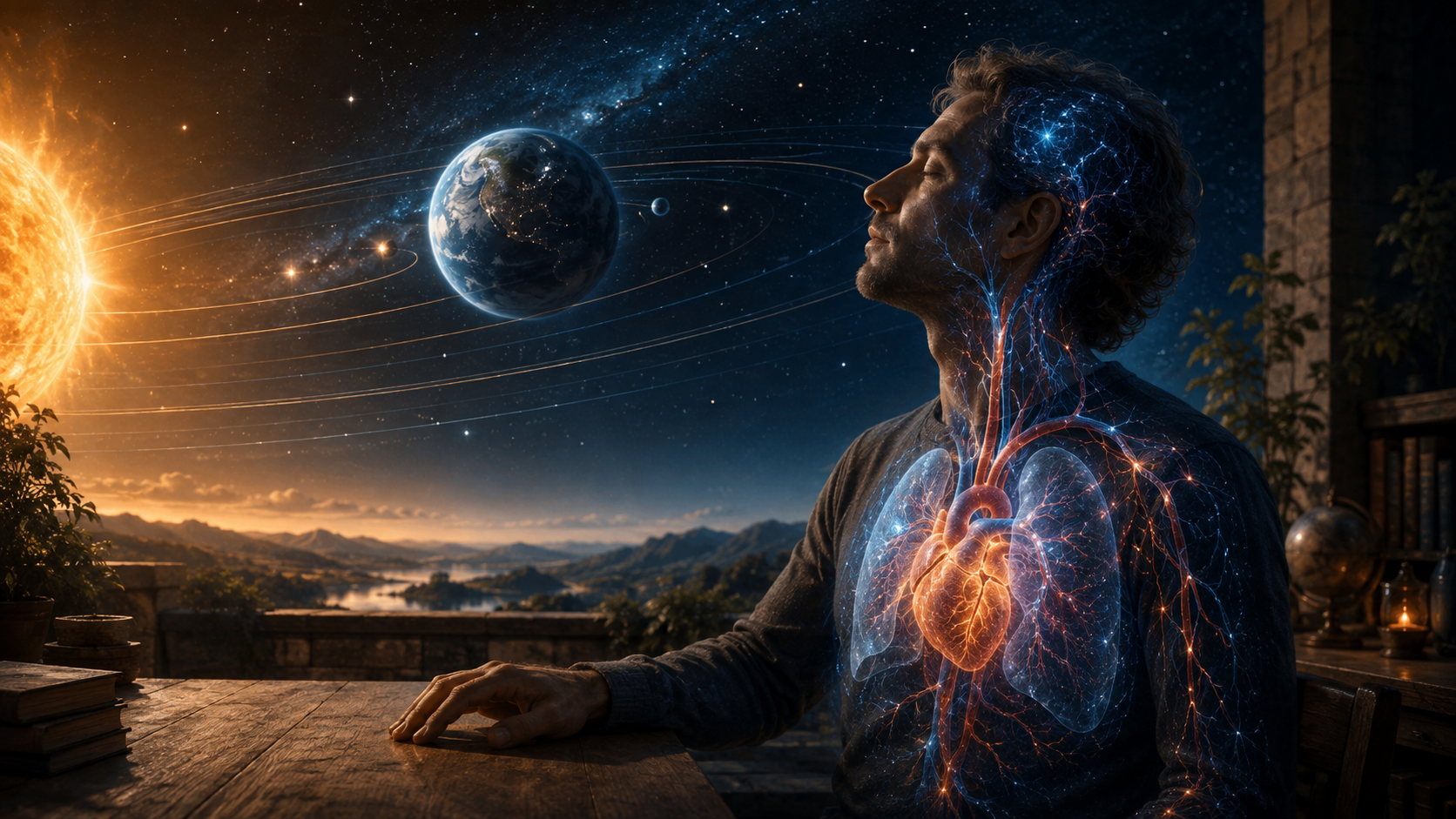
A person may sit silently in a chair, yet the body is never truly still. The heart pumps blood, lungs exchange gases, cells maintain themselves, electrical signals move through neural networks, and countless chemical processes continue without entering ordinary awareness.
If every inner operation appeared in consciousness at once, ordinary life might become impossible. Instead, the body hides most of its activity and presents a coherent experience: I am sitting, breathing, seeing, remembering, and thinking. Consciousness receives the finished result while the immense process supporting it remains mostly invisible.
The body may therefore serve as a small model of reality. It presents a stable surface while concealing the complex operations that make that surface possible. What is unseen is not necessarily absent. Sometimes a process remains unseen precisely so that a unified world can be experienced.
4. Does the Stone Enter Us, or Does Light?
Consider a stone, perhaps the clearest symbol of solid matter. It is cold, heavy, and hard. If it falls on a foot, it can cause real injury. Nothing about it seems dependent on imagination.
Nevertheless, the whole stone does not enter the eye or the brain. Light reflected from its surface reaches the eyes. Sensory and neural processes follow, and a stone with a particular color and shape appears in experience. When we touch it, the stone itself does not enter consciousness. Changes in skin, pressure receptors, nerves, memory, and interpretation become the felt qualities of coldness, texture, weight, and hardness.
This does not prove that the external stone is unreal. Nor does it mean that closing one’s eyes objectively destroys it. The more careful conclusion is that the stone as experienced—its color, form, coldness, hardness, and the judgment “this is matter”—is established through a meeting of external cause, sensory organs, neural activity, concepts, and consciousness.
The U.S. National Eye Institute’s explanation of how vision works describes how focused light reaches the retina and is converted into electrical signals that travel toward the brain. This explains an essential physical pathway while leaving open the philosophical question of how those processes become felt experience.
The stone never calls itself a stone. The names “stone,” “matter,” “hard,” and “existing” belong to conscious judgment. We do not receive an untouched copy of the outside world. We participate in an event through which a world becomes perceptible and meaningful.
5. Why Kant’s Phenomenon and Thing-in-Itself Matter
Immanuel Kant’s distinction is crucial here. Kant argued that we do not know objects completely apart from the conditions under which human beings experience them. What we encounter is the phenomenon: the object as it appears within space, time, and the forms of human cognition. The thing-in-itself refers to the object considered independently of how it appears to us, but it cannot be directly known as ordinary empirical experience. A fuller account is available in the Stanford Encyclopedia of Philosophy’s discussion of Kant’s transcendental idealism.
Invisible scientific processes should not simply be identified with Kant’s thing-in-itself. Earth’s rotation, blood circulation, cells seen through microscopes, and galaxies observed through telescopes belong to an expanded phenomenal world. Instruments extend observation; measurement and mathematics make hidden regularities publicly testable.
Kant’s question nevertheless remains alive. Is the known world identical to reality entirely independent of every condition of knowing, or is it reality as disclosed under human conditions of experience? Consciousness Field Theory inherits this question and asks what common ground makes phenomena, knowledge, and the distinction between observer and world possible.
6. The Visible World and the Explained World
We meet one world in two ways. First comes the visible world. The Sun rises, the ground looks level, the body stands quietly, and the stone remains solid. This is the direct world in which we live and act.
Second comes the explained world. Earth rotates and orbits. Light stimulates sensory organs. Biological activity continues inside the body. Such knowledge is formed through observation, language, instruments, memory, mathematics, measurement, and inference.
The visible world is not delivered from outside without transformation: color, sound, and hardness are experienced through sensation and consciousness. The explained world is not mere fantasy either: it follows regularities tested through experiment and repeatable measurement. External stimulus and conscious construction meet in perception; external regularity and conscious reasoning meet in knowledge. Reality may always have been an event in which matter, sensation, information, and consciousness converge.

7. Why Reality Does Not Feel Created by Consciousness
If consciousness participates so deeply in experience, why do we rarely notice it? One reason is the stability and shared character of waking reality. In dreams, people and places may change suddenly. In waking life, a stone left today is likely to remain tomorrow. Others see the same building. Fire burns different people, and gravity applies to everyone.
Because of this consistency, reality appears completely independent of consciousness. Yet another interpretation is possible. Perhaps reality is stable not because consciousness is irrelevant, but because it follows an order deeper than any individual mind.
This is the hypothesis of the Grand Consciousness Field Theory. It does not claim that personal wishes can rewrite physical reality. It proposes that individual consciousness may arise within a shared ground so deep and consistent that many observers encounter one common world. This is a philosophical model, not an established scientific conclusion, but it addresses the difficult relation between private experience and shared reality.
For the broader framework connecting scientific law, philosophical experience, and religious questions of origin, see Part 6, Chapter 4 | Can Consciousness Field Theory Unify Science, Philosophy, and Religion?
8. The Computer Screen and the Metaphor of 0 and 1
A computer screen displays words, photographs, cities, and galaxies. The user does not directly see electrical states, machine instructions, memory operations, or the flow of code. The interface transforms complex internal activity into a form human beings can use.
This analogy has limits. A tree on a screen is not a living tree, and a digital flame does not burn the hand. Reality is not proven to be a computer simulation simply because interfaces exist. The analogy makes only one point: the visible result and the operation making that result possible may belong to different descriptive layers.
Likewise, we experience a completed world of colors, shapes, objects, and distances without directly seeing the work of light, sensation, nerves, memory, and concepts. The material world can be compared to a vast interface stable enough for human life, while the world of consciousness includes the information, relations, laws, and meanings through which that interface becomes experience.
9. The Humanoid and Invisible Intelligence
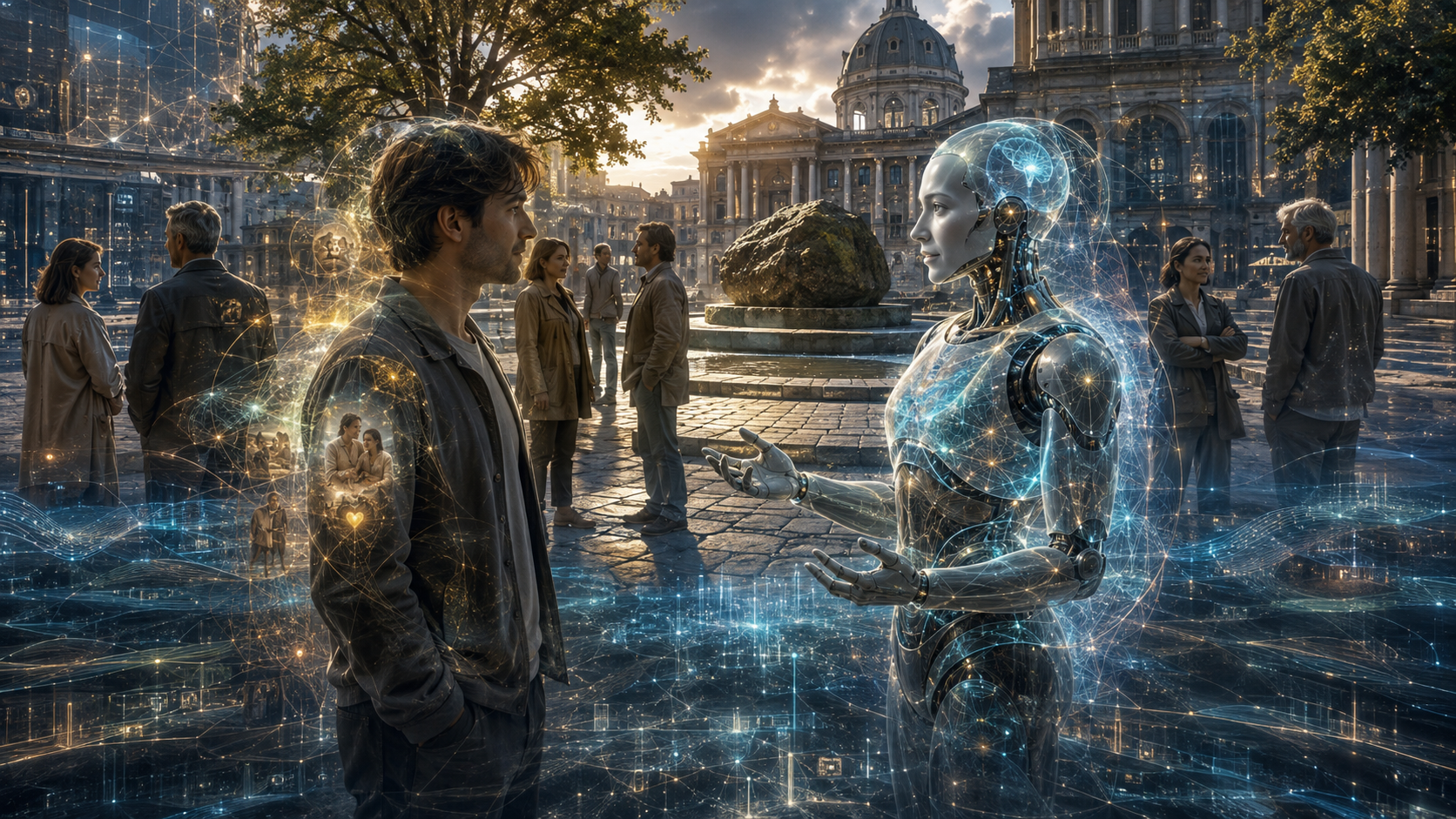
Imagine a humanoid robot speaking with a person, recognizing expressions, and answering questions. What appears is a face, body, movement, and voice. The language model, data, algorithms, and computation enabling those actions remain invisible at the surface. The body is the visible interface; information processing is the unseen operation.
Human beings cannot simply be reduced to the same structure, and consciousness should not be identified with AI computation. Still, the comparison raises a useful question: Why do we treat the visible human body as the whole person? Consciousness cannot be seen, yet remembering, loving, suffering, judging, and assigning meaning are among the most important dimensions of human existence.
The body may be the interface through which consciousness meets the material world. The physical world may be a shared stage on which countless centers of experience meet, form relationships, and create a common history.
10. Blueprint and Building, Consciousness Field and Reality
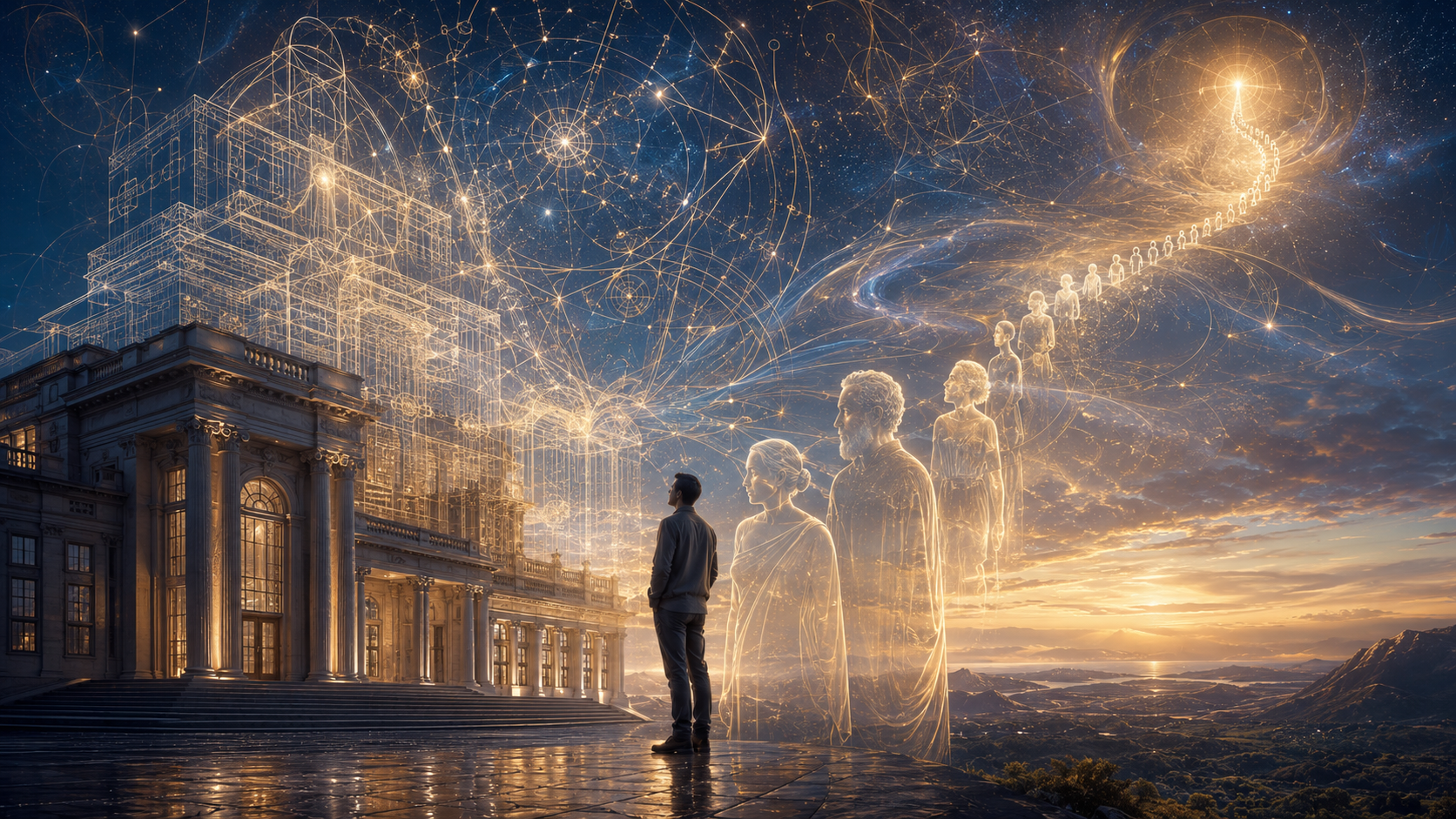
A building is visible, but its design intention is not. Walls, pillars, doors, and stairs exist materially. Yet their arrangement cannot be fully understood without considering purpose, proportion, planning, and use. A blueprint alone cannot shelter a family, but a finished building alone does not reveal every intention behind its form.
The physical world may be compared to the completed building, while laws, information, and meaningful relations resemble its design. Consciousness is the subject capable of understanding that design and experiencing the building as a world. Consciousness Field Theory therefore asks whether consciousness is merely a late by-product inside the universe or a more fundamental, transparent canvas upon which time, space, matter, and meaning can appear as reality.
Order alone does not scientifically prove a particular creator or reveal that creator’s character. That further question belongs to philosophy and religion. What can be observed is that reality possesses extraordinary structure and is experienced in a way that permits life, relationship, discovery, and meaning.
11. Logos: The Ancient Insight That Meaning and Order Shape a World
Many ancient traditions treated word, reason, spirit, law, or order as more fundamental than visible matter alone. The Gospel of John speaks of the Logos in the beginning and of all things coming to be through it. Logos has been understood not merely as spoken sound, but through a broader field of meaning that includes word, reason, intelligibility, and order.
Did matter exist first and consciousness later attach names to it? Or could concept, information, and order be prior conditions through which matter appears as an intelligible world? Science investigates how natural laws operate. Philosophy asks how those laws are known. Religion asks about their source and purpose. None automatically proves the others, yet all meet in one question: Why is there an understandable order and an experienceable world rather than meaningless chaos?
The Grand Consciousness Field Theory proposes that consciousness may be part of the fundamental ground from which intelligibility, experience, and meaning arise.
12. Why Looking Backward Leads Toward the Origin of Consciousness
Each body is connected through parents to ancestors. Each mind is also shaped by family, language, society, and culture. We are not born with a completed vocabulary. We enter a community that already contains concepts, values, histories, and memories.
Tracing this chain backward leads toward questions about early humanity and the first consciousness. Biological ancestry, however, does not scientifically demonstrate the transmission of a single consciousness. Genetics, cultural inheritance, the development of individual awareness, and religious concepts of soul must remain distinct.
Cheonbong’s structure of primordial consciousness–first consciousness–individual consciousness is a philosophical hypothesis intended to explore this gap. It proposes that individual centers of experience may not arise in absolute isolation, but may be differentiations of a more fundamental flow of consciousness appearing through life and bodily interfaces.
The purpose is not to declare the ancient past automatically true or modernity corrupt. A serious inquiry must preserve both the oldest questions about origin and the verification methods of contemporary science.
13. Not Two Worlds, but Two Ways of Seeing One Reality
We began by distinguishing the directly visible material world from the less visible domain of relations and principles disclosed in consciousness. As the inquiry continues, however, the border becomes less absolute.
The visible world cannot be experienced without sensation and consciousness. The invisible order becomes knowledge through observation, measurement, language, and mathematics. They are not hostile, independent realities. One is the stable surface through which life proceeds; the other is the depth through which consciousness understands the relations beneath that surface.
Both matter and consciousness may therefore belong to one more fundamental reality, appearing as exteriority and interiority, object and experience, structure and meaning. This does not deny matter. It seeks a deeper account of why material reality is so stable, shared, and resistant while always becoming known and lived within conscious experience.
14. Why Humanity Needs to Understand This Now
This question is not merely philosophical curiosity. When human beings understand themselves only as competing material organisms, other people and nature can easily appear as resources to control. More wealth, stronger weapons, and greater dominance become final goals. War, ecological destruction, extreme competition, and alienation follow.
If individual consciousness, life, and nature participate in a deeper shared ground, another ethic becomes possible. Harming another person or the living world also damages the shared reality in which one’s own existence unfolds. Belief alone will not end war, but a civilization cannot understand its crises without examining the assumptions beneath its view of humanity and reality.
A building requires different reinforcement depending on whether it stands on sand, ice, or bedrock. In the same way, humanity’s future changes according to what it accepts as its foundation: matter understood only as competition and possession, or a field that also includes relationship, meaning, responsibility, and consciousness.
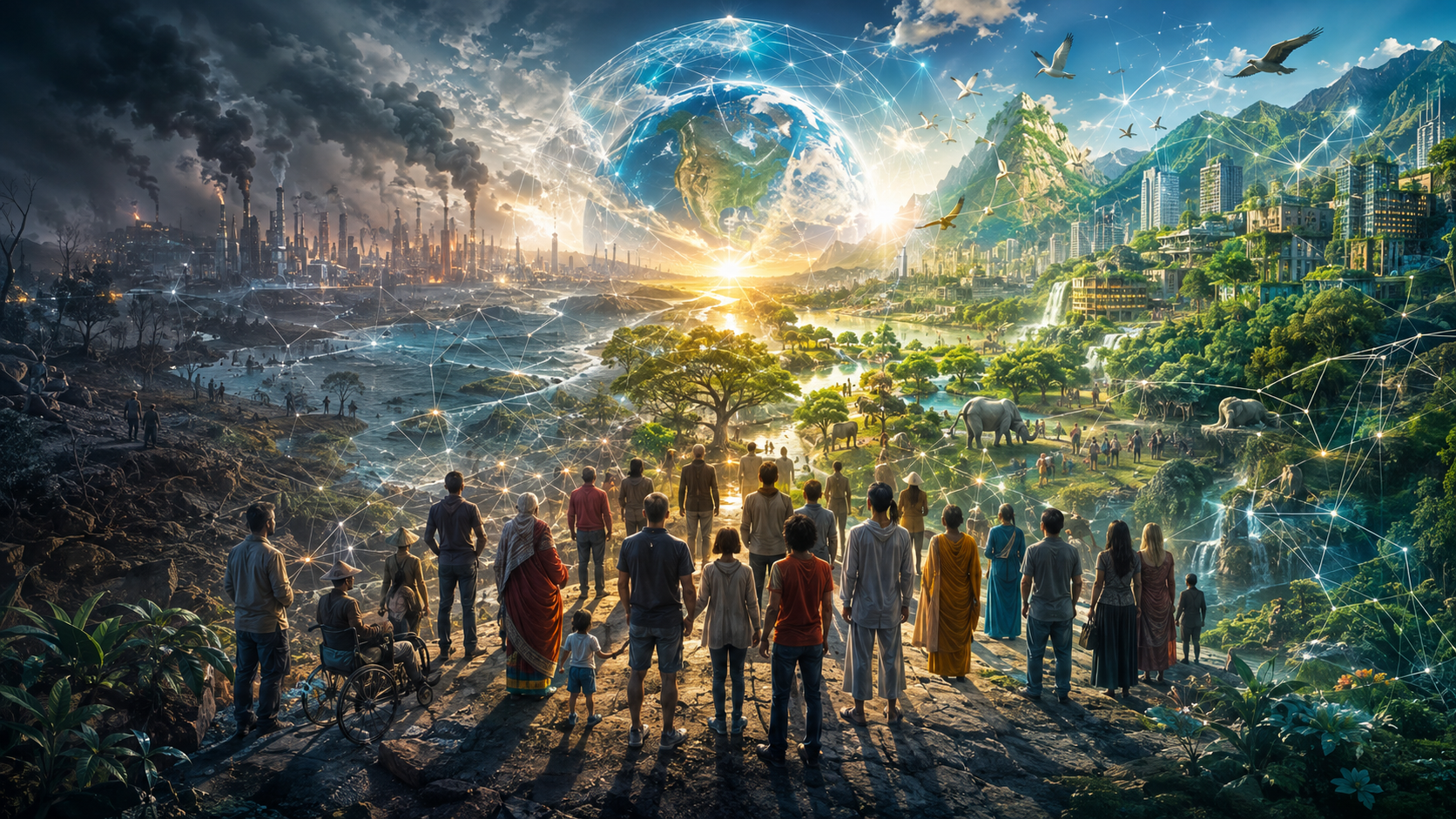
Epilogue | Reality May Deceive Us Because It Is So Complete
We rarely notice consciousness because reality appears complete. The stone is solid, the city persists, other people answer us, and physical laws remain consistent. Consciousness seems unnecessary precisely because the world it presents is so convincing.
Yet every color, sound, object, scientific theory, philosophical question, and religious meaning becomes present through conscious experience. This fact alone does not prove that an external world vanishes without an individual observer. It establishes something more careful: every world we have known, tested, named, or discussed has become known within consciousness.
The hypothesis of the Grand Consciousness Field goes further. It asks whether the material world as a whole may arise within a deeper ground of consciousness—not as a private fantasy, but as a stable, lawful, shared reality. Matter would not be abolished. It would be understood as one expression of a reality whose interior dimension is consciousness and whose exterior dimension is the world we touch.
Perhaps the material world and consciousness are not two separate realities, but two faces through which one deeper reality becomes visible, experienceable, and meaningful.
From the Previous Chapter | Part 6, Chapter 6
Part 6, Chapter 6 | What Is the Consciousness Field?
Read Part 6, Chapter 6 | What Is the Consciousness Field?
The previous chapter explored consciousness as a transparent ground through which time, space, matter, the observer, and the universe appear. The present chapter continues that inquiry by asking how visible matter and conscious experience become one shared reality.
Next Chapter Preview | Part 7, Chapter 1
Consciousness and Buddhism | Does a World Exist Outside the Mind?
The next chapter begins a new inquiry into Buddhist philosophy, consciousness, mind-only thought, emptiness, appearance, and the question of whether a world can be separated completely from the consciousness that experiences it. The link will be added when the English chapter is published.
Explore This Chapter Through Video
2 Minutes | The Essential Question
Begin with a short thought experiment about a stone, reflected light, and the world that appears in consciousness. The English 2-minute video link will be added after publication.
10 Minutes | Material Reality and Conscious Experience
Explore Earth’s hidden motion, the body’s invisible activity, Kant’s phenomenon and thing-in-itself, and the relation between the visible and explained worlds. The English 10-minute video link will be added after publication.
20 Minutes | Deep Exploration
Enter the complete inquiry into shared reality, interfaces, humanoids, Logos, primordial consciousness, ethics, civilization, and the Grand Consciousness Field. The English 20-minute deep-audio link will be added after publication.